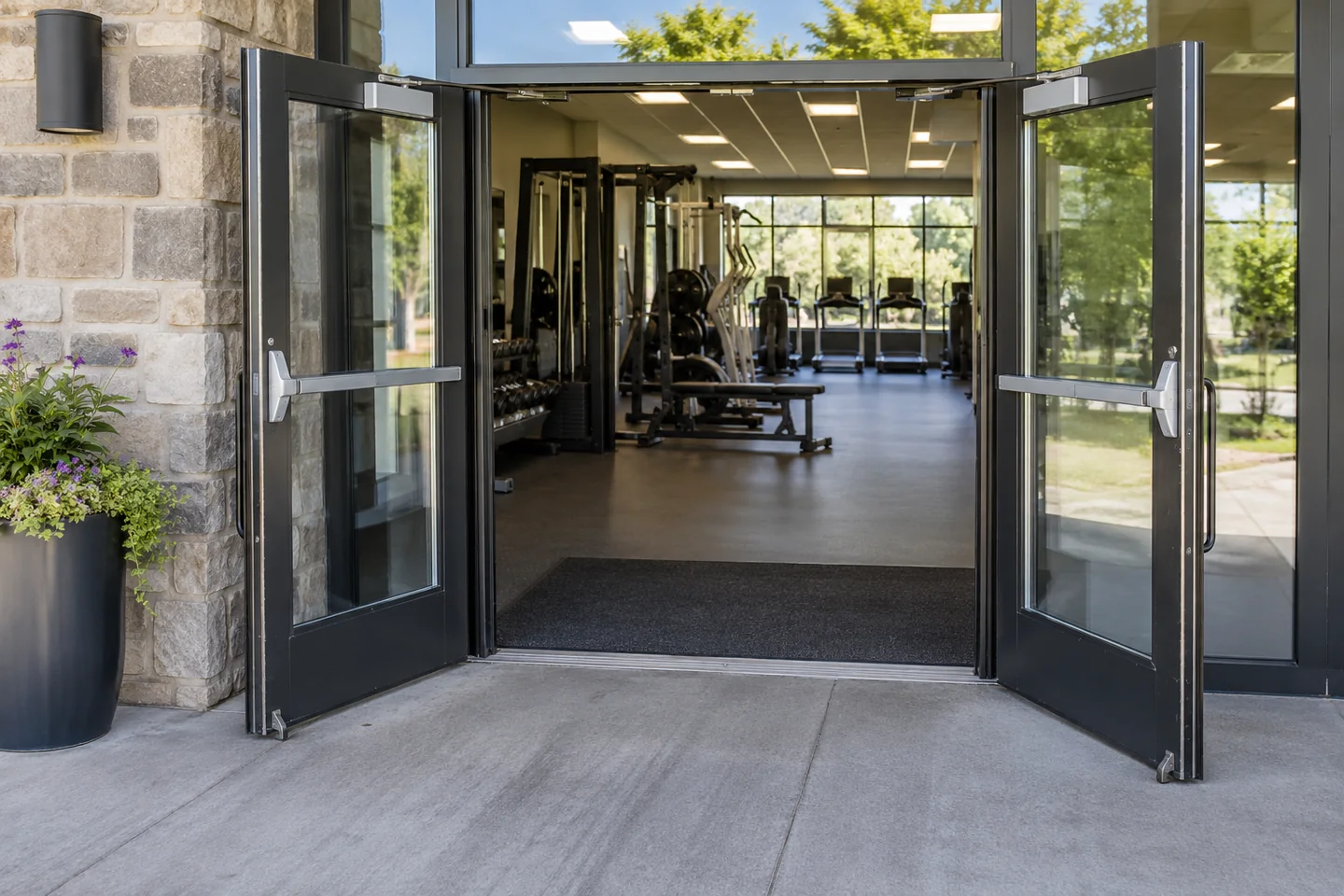
Describe the route you will take
An accessible entrance is one part of a visit. The route may continue through gates, corridors, a lift, changing facilities and a crowded exercise floor. Ask about that complete journey. Explain the features you need to use rather than expecting a general answer about the building to cover them all.
If measurements matter, request them or arrange a visit to inspect the relevant area. A doorway described as wide may not answer your question. Ask about thresholds, door-opening arrangements and alternative routes where applicable. Photographs can help with orientation, but they may not show a step or a tight turn just outside the frame.
Find out whether the accessible route is available during all hours covered by your membership. A side entrance may depend on staff being present, or a lift may serve only part of a complex. If you expect to attend early or late, ask about those times explicitly. Do not assume that a daytime tour demonstrates every access arrangement.
It can help to write the questions as a route: arrival, entry, changing, exercise, toilet, help and departure. Send that list to the facility if a phone conversation is difficult. This is your own planning aid, not a demand for an elaborate report. It allows different staff members to answer the parts they know and makes it easier to spot a missing link between rooms that are individually usable.
Ask about facilities in concrete terms
Discuss the changing and toilet facilities you intend to use. Ask whether they require a key, booking or staff assistance, and how to request it. If you need particular equipment or space, name it. Facilities described with the same label can have different layouts and features.
On the gym floor, ask how routes between stations are kept clear and whether equipment can be introduced in a suitable area. The presence of many machines does not establish that their controls, seats or access points will work for you. Arrange an assessment or introduction with someone who can explain the actual equipment and their own limits of competence.
If a companion or support person will attend, ask about the facility's entry and participation arrangements. Clarify the role they will have and any relevant booking requirements. Getting the information in advance avoids leaving reception to interpret an unfamiliar situation at a busy time.
Include sound, sight and communication
Accessibility questions are not limited to steps and door widths. You may need information about music, lighting, visual contrast, announcements or the format of instructions. Describe the specific condition that makes a visit easier or harder. This gives the facility a better chance to explain what it can provide.
Ask whether a quieter orientation can be arranged and whether written information is available in a useful format. If you need extra time to understand an equipment demonstration, say so when booking. The person answering the phone may need to consult the gym team, so allow room for a considered reply instead of accepting an immediate guess.
If an app is part of entry or class booking, check that you can use it and ask about alternatives. A facility can be physically accessible while its booking process remains difficult. The same applies to forms and communication channels. Work through the ordinary tasks you will need repeatedly, not just the first appointment.
For written replies, ask the person responding to distinguish confirmed features from things they still need to check. 'I will ask the gym manager about that machine' is a useful interim answer. A confident guess can waste a journey. If you visit to assess a specific arrangement, bring the correspondence so the conversation starts from the same information rather than a fresh interpretation of a broad request.
Check how assistance and changes are handled
Ask how to contact staff from the areas you will use and discuss the facility's emergency arrangements relevant to you. A gym should explain its own procedures; do not rely on a generic online description of what another building does. Where an individual arrangement is needed, clarify who is responsible for confirming it.
Ask what happens if an important feature is temporarily unavailable. A lift closure, equipment relocation or maintenance work may affect your visit. Find out where updates are posted and whether the facility can tell you before you travel. You do not need to predict every disruption, but knowing the contact route is useful.
If possible, make a trial visit with the arrangements you expect to use regularly. Keep notes on questions that remain unanswered and confirm significant promises in writing. This is not about proving that a facility is universally suitable or unsuitable; it is about establishing whether the specific service can meet your needs.
A clear answer that a feature is unavailable is more useful than an optimistic answer with no detail. You can then compare another location or ask what alternative arrangement is possible. The goal is a visit whose essential parts have been considered before you commit to repeating it.