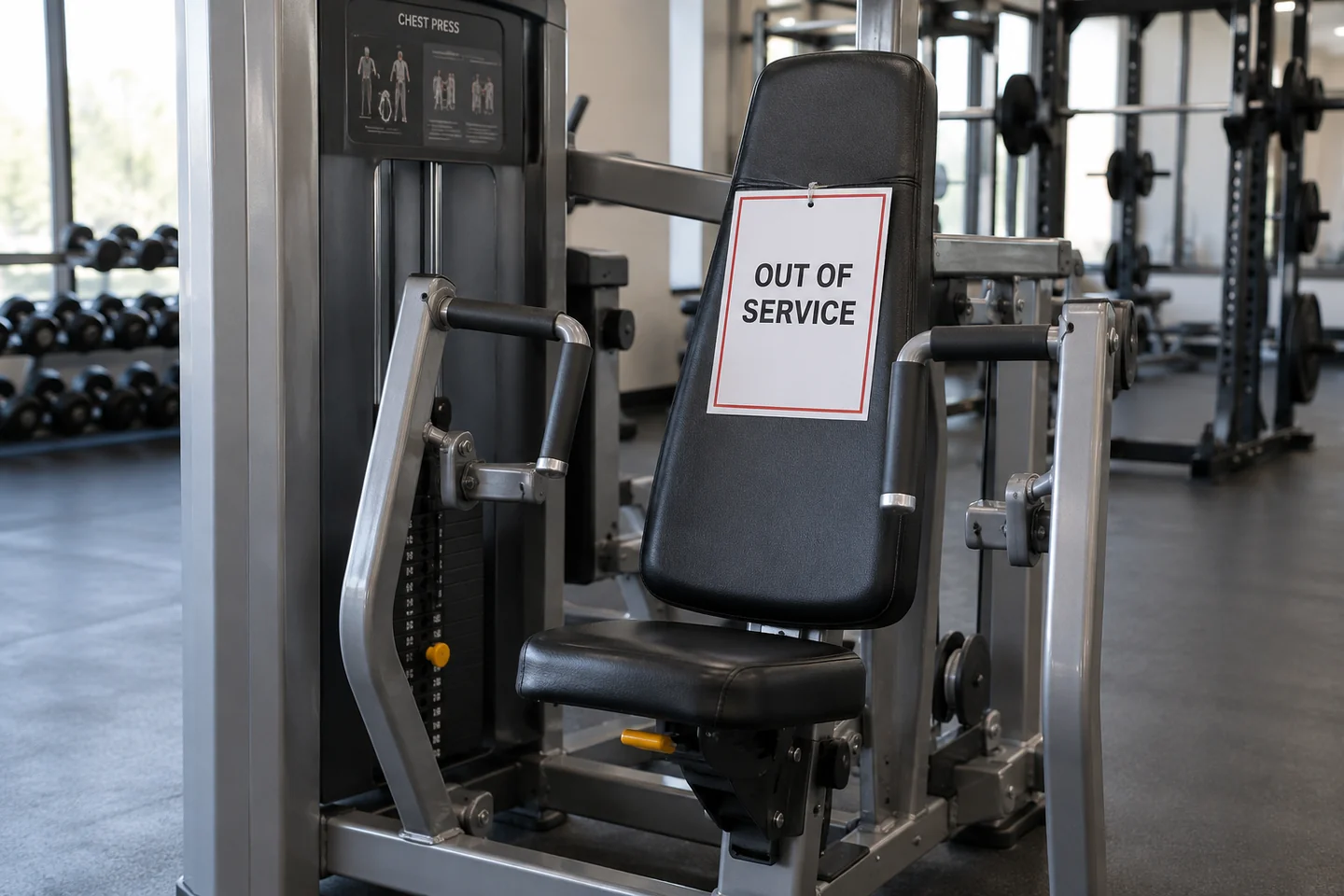
Stop and identify the machine
A frayed cable, loose adjustment, unusual movement or broken control deserves attention even if someone has just used the machine. Stop using it. Do not add resistance to see whether the problem remains, and do not ask another member to try it. The useful next step is a clear report to the people responsible for the equipment.
Give staff the location and identifying details. 'The second cable station beside the window' is more useful than 'a machine at the back'. If there is an equipment number, include it. Explain what you noticed without inventing a diagnosis: the seat would not lock, the display went blank or a part moved unexpectedly.
If someone is about to use the machine, tell them that you have reported a possible fault. Let staff apply their out-of-service procedure. Do not dismantle parts, remove an official notice or attempt a repair because a screw appears easy to reach. A small visible symptom may not reveal the underlying problem.
Work around the closure, not the fault
Ask whether there is another available station suitable for the exercise you have already been taught. A nearby machine can look similar and still require different setup. If you cannot get an appropriate introduction, leave that item out of the visit rather than experimenting to preserve a written plan.
An out-of-service notice remains meaningful even when the equipment seems to work. Another user saying it was fine yesterday does not replace an inspection. Use it again only once the gym has returned it to service through its own process.
If the fault affected you, tell staff what happened and follow the facility's incident-reporting procedure. Keep your account factual, including the approximate time and machine location. You do not need to establish blame to make the report useful. Early, specific information gives the gym a better chance of finding the right equipment and keeping it unavailable until it has been checked.