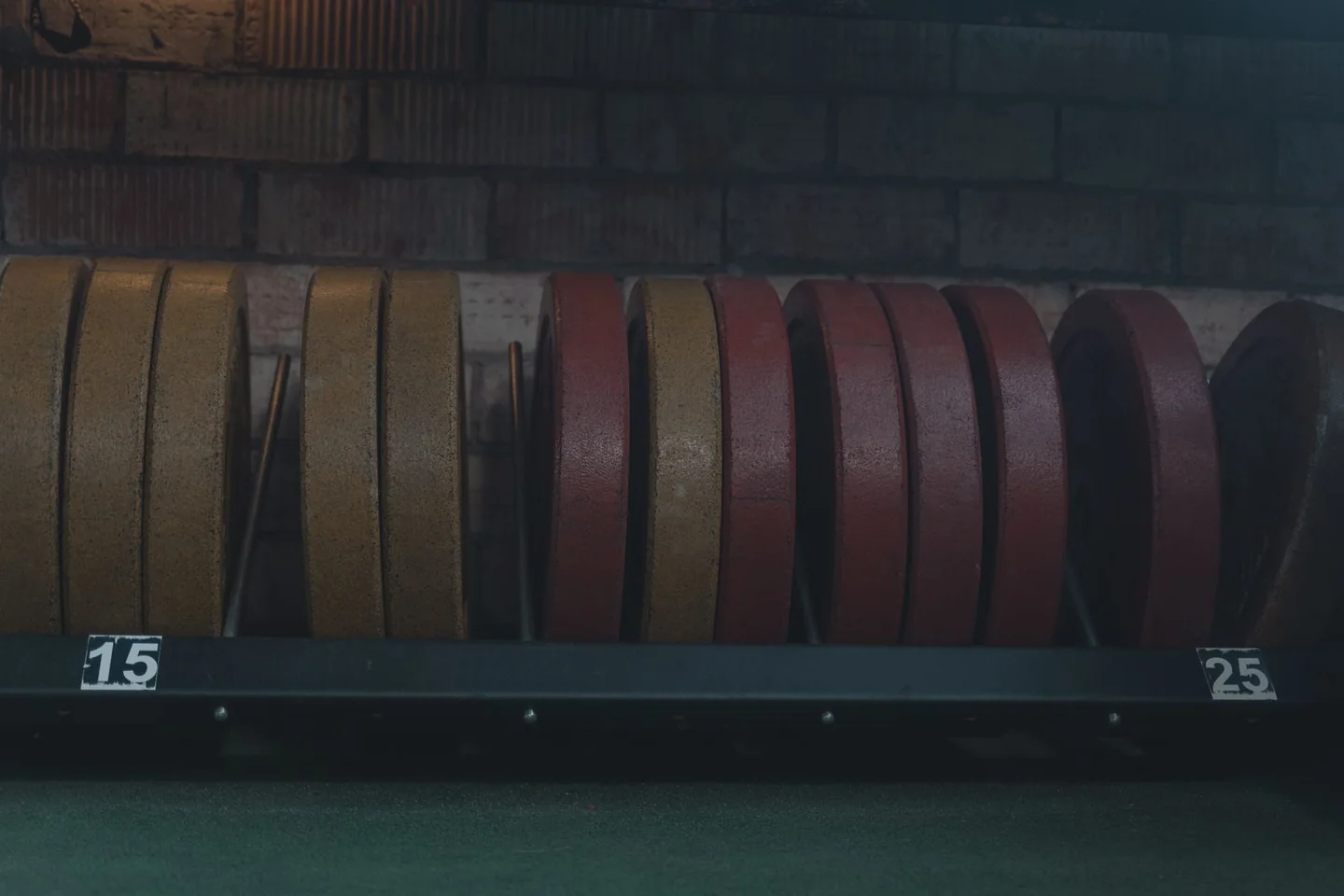
Look for the storage system
Plate trees, wall pegs and rack-mounted holders are not interchangeable places to put any object. Look for weight labels and ask how the gym organises its plates. Different hole sizes and plate designs may belong to different equipment areas. A nearby empty peg is not necessarily the correct one.
Only handle a plate you can move comfortably and have been shown how to manage. Take one at a time rather than making a difficult stack to save a journey. Keep fingers clear of the gap between plates as you return them. If a holder is high, crowded or awkward to reach, ask for help rather than stretching while carrying a load.
Before removing plates from any bar or machine, establish that it is free and learn the correct unloading procedure from staff. Do not assume a loaded station has been abandoned because nobody is touching it at that moment. Some setups can become unstable if unloaded incorrectly; this is not a job to improvise from the appearance of the equipment.
Do not make a new obstacle
Place plates onto the intended holder rather than leaning them against walls or leaving them flat on a walking route. A floor plate is easy to overlook when attention is on another machine. The same applies to collars and smaller accessories: use their storage place instead of balancing them on a plate tree.
If a peg is bent, loose or already full, report it and use the alternative staff identify. Forcing another plate onto an unsuitable holder makes the area harder to use. Where the gym separates bumper plates from other types, preserve that organisation rather than sorting only by the printed number.
You do not need to reorganise an entire room after your session. Return the equipment you used, keep the route clear and tell staff about storage that needs attention. When someone is already returning plates, give them room to finish rather than reaching around their hands. The task is easier when each person can see where the plate is going.