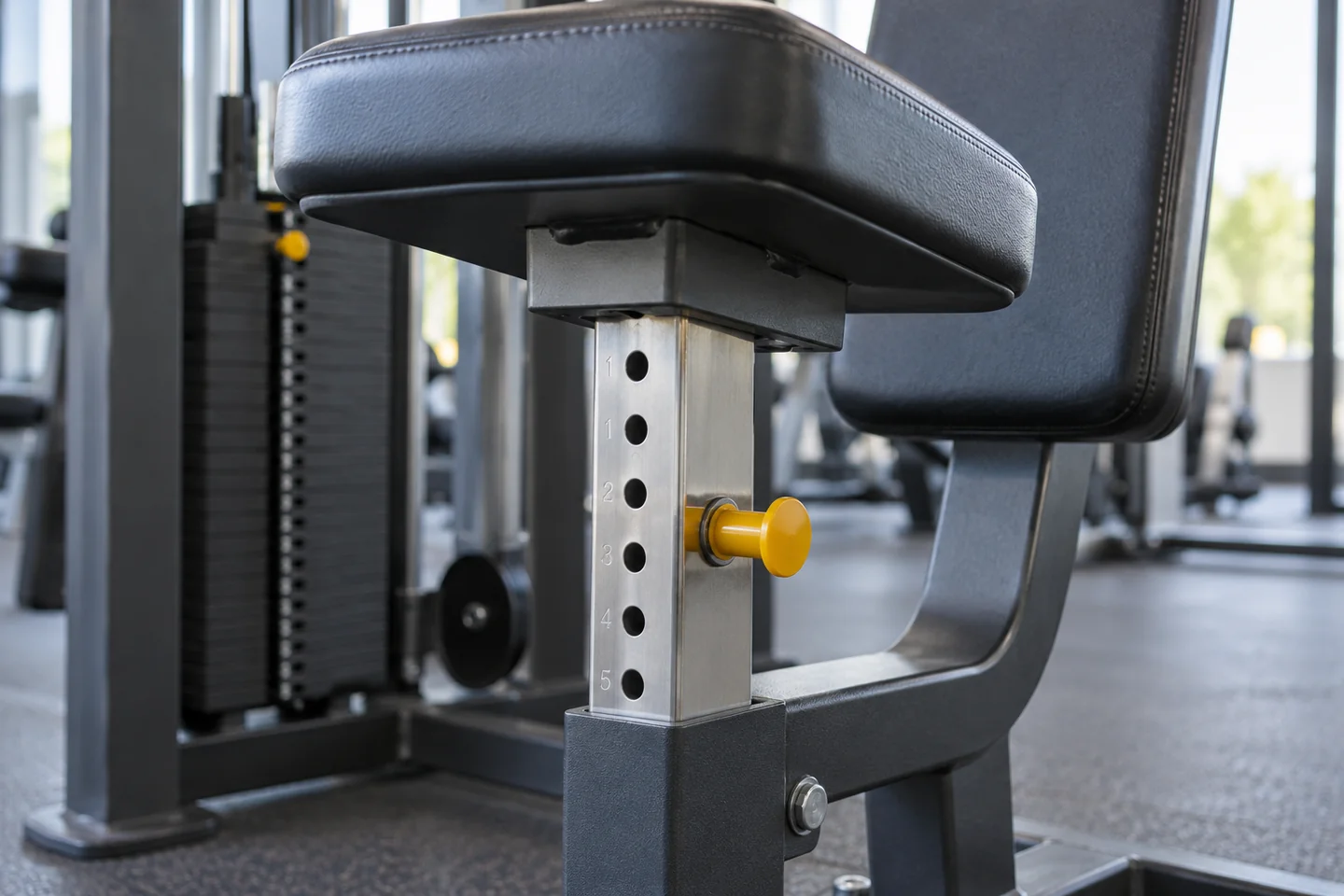
A number only means something on one model
'Seat four' is useful when it describes the same seat on the same machine. It is much less useful in another branch, where the numbering may run in the opposite direction or refer to a different adjustment. Record the machine name and, if needed, its location as well as the setting.
Ask an instructor to explain what each adjustment changes. A seat height, back-pad position and movement-start setting are separate controls. Write them separately rather than grouping them under one number. If there is no visible scale, use a description the instructor agrees is clear, without marking or altering the equipment yourself.
Do not assume the settings left by the previous user are a reasonable starting point for you. Reset the machine through the procedure you have been taught. Make adjustments while the equipment is unloaded or otherwise positioned as its instructions require; if you do not know the procedure, get a demonstration before experimenting.
A useful note also identifies the exercise position, if the machine has more than one approved use. Otherwise, an accurate number can be recalled in the wrong context. Ask the instructor which description will distinguish the setup clearly. Avoid inventing shorthand that seems memorable in the moment but could mean several things a week later.
Make the note easy to use
A phone note can be short: machine name, seat setting, other adjustment and one reminder about the control. A small paper notebook works too. Choose something you can consult without placing it in a moving mechanism or holding it while adjusting a heavy part.
Photographs are not always necessary. If you take one with the facility's permission, frame the control alone and avoid other people. A picture of a numbered pin without the machine's identity can become ambiguous later. Add a caption while the explanation is still fresh.
Check the setting each time rather than treating the note as proof that the machine is ready. Someone may have moved the pad after you looked at it, or the adjustment may not be fully engaged. A written reference helps you remember the intended position; it cannot confirm that a mechanism has locked.
Update when the equipment changes
If the gym replaces a machine, ask for a new introduction even if the replacement has the same exercise name. Do not transfer the old numbers. Likewise, if your setup feels different from the one demonstrated, stop and ask rather than repeatedly changing several controls to chase a remembered sensation.
Keep the record limited to what is useful. A note that becomes a page of unclear abbreviations is harder to trust than a few labelled settings. Delete obsolete entries or mark them as belonging to another location. The aim is to reduce small points of confusion on arrival, while keeping the equipment check and the opportunity to ask questions part of each visit.
Keep shared notes personal to the setup
If you attend with a friend, keep your settings separate. Similar height does not establish that the same position is appropriate, and a shared notebook can blur whose number is whose. Label entries with enough detail to avoid mixing them up.
When a trainer changes a setting during a later lesson, ask why and update the record immediately. Cross out the old value rather than leaving two unexplained numbers side by side. The note should show the current instruction for that machine, while any uncertainty goes back to the person teaching you.