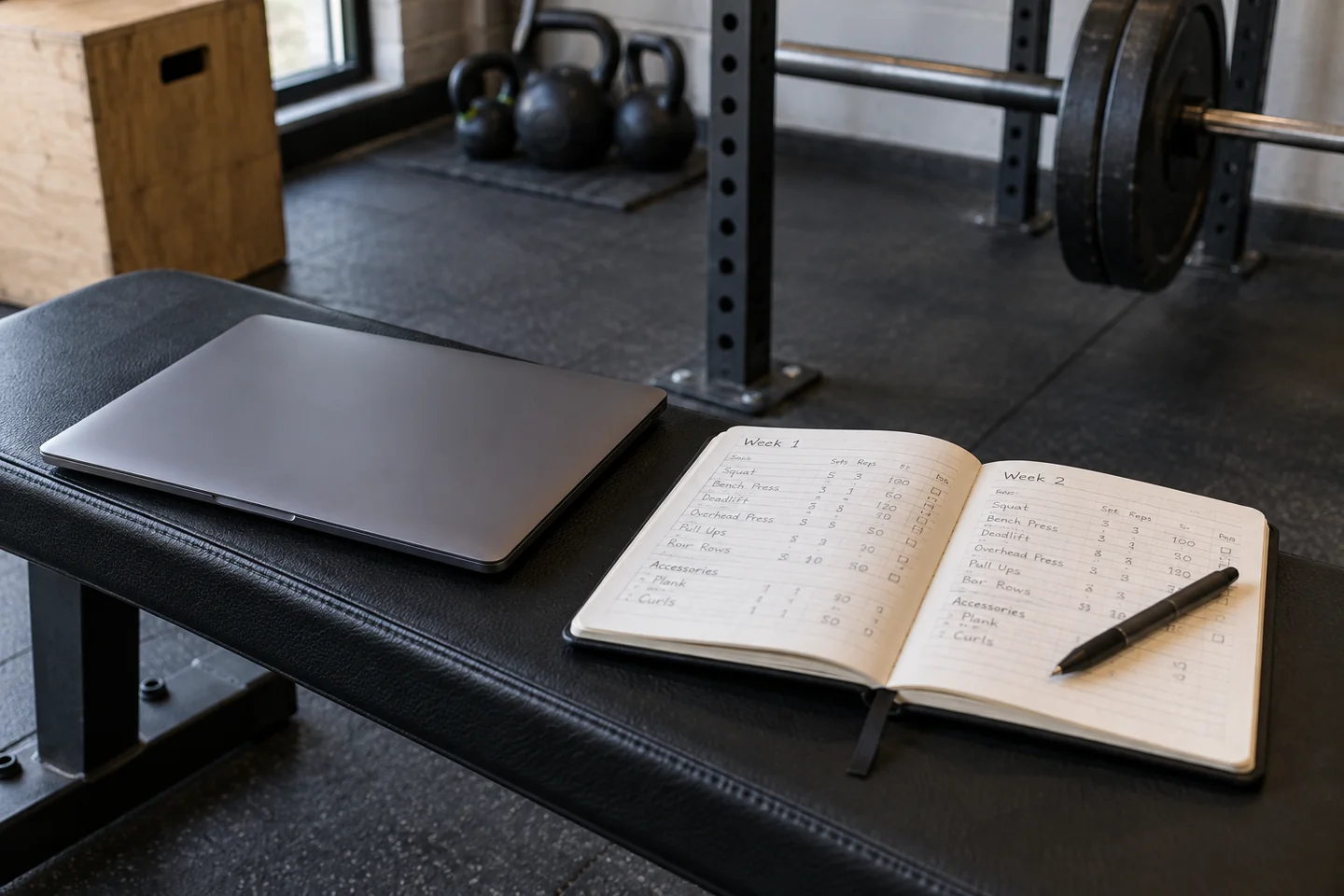
Read the reason behind the urge
Perhaps the programme requires equipment your gym does not have, takes longer than your available appointment, or uses instructions you cannot follow. These are concrete reasons to seek a change. They can also help you judge whether the next plan solves the problem.
Feeling bored or seeing an impressive video is a less specific starting point. Ask what you want to be different. If the answer is simply that the new programme looks exciting, give yourself time to read it beyond the first page.
Check how much of the current plan you actually performed. A routine that rarely reached the calendar has not necessarily been tested. Replacing the document without changing the scheduling problem may produce the same result in a new font.
Inspect the demands
Look at weekly attendance, session length, equipment and assumed experience. A programme described as beginner-friendly can still depend on movements you have never been taught. Determine what support would be needed before deciding that the plan is ready to use.
Read the progression instructions. They should explain what to do when work becomes manageable and what to do when the next step is not. A long exercise list with no guidance about decisions is incomplete as a working routine.
Consider whether the source describes who the programme is for and what it cannot address. Broad fitness information cannot account for your medical history, symptoms or individual circumstances. Those may require qualified assessment rather than a different download.
Inspect the cost beyond the headline purchase. Does the programme assume access to a particular gym, repeated coaching appointments or equipment you do not own? Are demonstration materials included and accessible in the format you use? A low initial price may still involve commitments that make the plan a poor fit.
Check whether the plan can be read before a recurring payment begins and how cancellation works. Those are current product details, so verify them directly. A training plan should be judged as a usable set of instructions as well as a product being offered for sale.
Compare without collecting
Use a short set of criteria: fits the available days, uses accessible equipment, explains the exercises and gives understandable adjustments. Apply the same criteria to each option. This is easier than trying to rank every training philosophy on the internet.
The ACSM's 2026 guidance places value on regular participation and individual fit rather than unnecessary complexity. A plan does not become more suitable just because it introduces unfamiliar terminology or requires a complicated weekly rotation.
Be cautious about promises tied to a fixed number of weeks or a guaranteed change in appearance. Those claims do not tell you whether the actual work fits your circumstances.
Make the transition visible
If you do change programmes, date the change and keep the previous log. Record the new exercise versions separately so that similar names do not create false comparisons.
Choose a reasonable review point rather than searching for another replacement after the first session. The purpose of the change is to make training more workable. If you spend more time choosing plans than carrying one out, simplify the decision process before expanding the collection again.