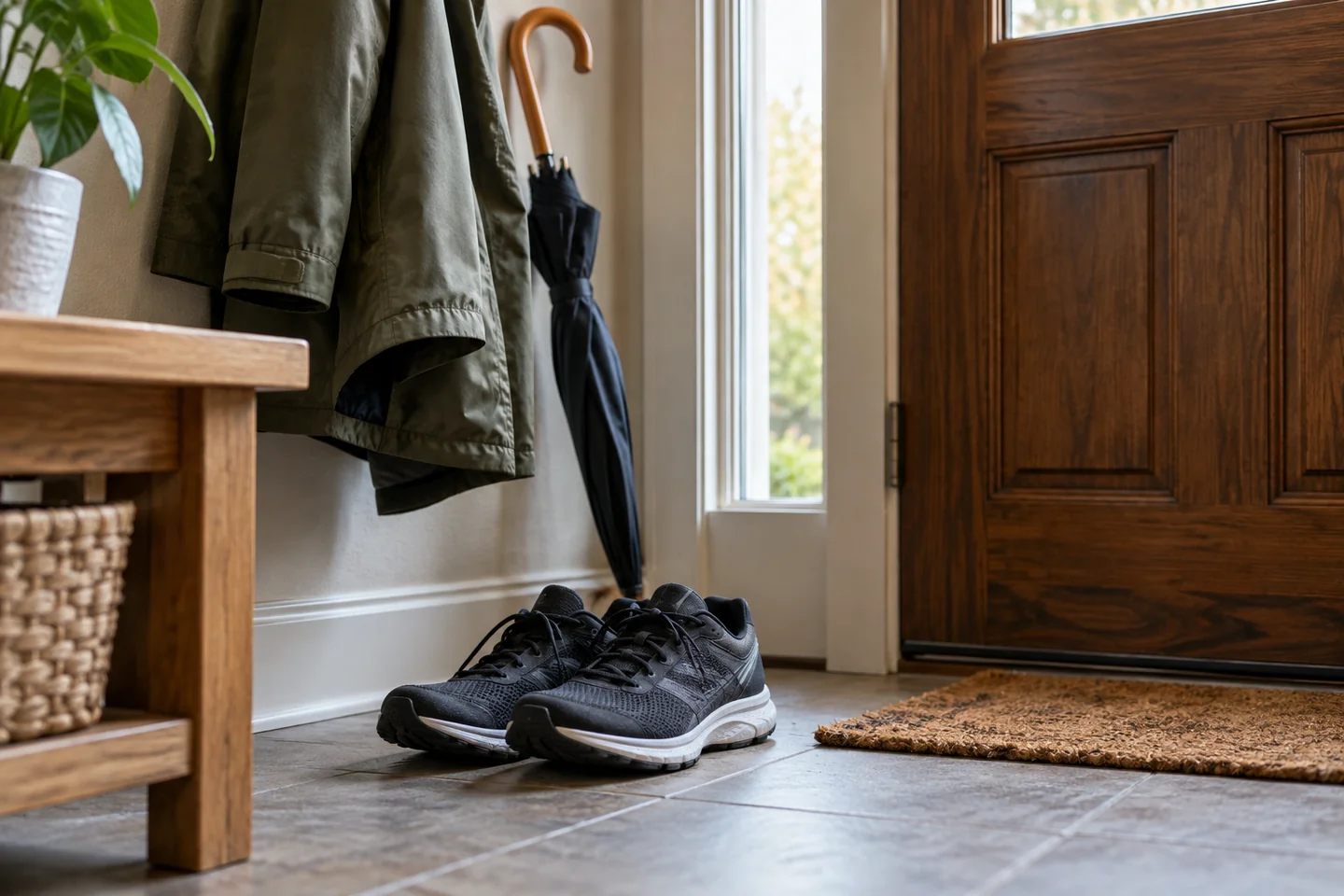
Identify what has changed
Perhaps the route home is now dark, the gym journey takes longer in bad weather, or a seasonal work pattern has altered your finish time. These are different constraints. Naming the actual change helps you choose an appropriate response.
Avoid assuming that a loss of enthusiasm explains every difficulty. A once-simple journey may now require extra clothing, different transport or more time. The routine has a practical problem before it has a motivational one.
Look at recurring commitments too. School terms, caring arrangements, seasonal work and regular activities can all reshape the week. A programme designed around summer evenings may need a new place in an autumn calendar.
Keep the focus on your actual location and circumstances. General advice about winter mornings may not apply to your climate or workday. Plan for the conditions you encounter rather than the season pictured in a training campaign.
Recheck the journey
If you travel on foot or by bicycle, review the route and the equipment appropriate to the conditions. A different route or transport choice may be sensible. Do not preserve a training appointment by accepting a journey that feels unsafe.
If you drive or use public transport, allow for the delays that regularly occur. Check current services and venue hours when they change. A timetable remembered from several months earlier may no longer support the same slot.
Include the return journey, especially after a late session. Arriving at the gym is only half the trip. The time and conditions afterwards matter when deciding whether the appointment still fits.
A nearby alternative may reduce travel, but assess its equipment and access before changing the programme. A convenient venue still needs to support the work you intend to do.
Try a revised route or appointment before depending on it for a tightly scheduled day. A journey that appears shorter on a map may include a poorly lit section, a transfer or a longer walk from the stop. Checking the practical details once gives you a firmer estimate than repeatedly hoping the new arrangement will be quicker.
Review the kit without overbuying
Check what you already own and what the route genuinely requires. Layers for travel, a way to keep kit dry or a spare change may solve a specific problem. They do not need to become a completely new collection of training clothes.
Allow wet items to dry and follow care instructions. If the bag remains packed between visits, damp kit can turn the next departure into another small obstacle. A simple reset is particularly useful when conditions are less predictable.
If you train at home, consider available space and household use at the new time. A room that was empty in one season may now be occupied. Plan around that rather than improvising a cramped setup among furniture.
Keep equipment storage safe and the walking route clear. Seasonal coats, shoes and bags can gradually occupy the floor space previously used for exercise.
Change the appointment before the programme where appropriate
Sometimes the exercises are still suitable and only the time needs to move. Test that possibility before replacing the whole routine. A different slot can solve a daylight or transport issue without losing the familiar work and record.
If the available time has genuinely reduced, ask for a suitable shorter arrangement. Do not assume that every rest and preparation step can be compressed to preserve the full list.
Where a seasonal sport or new activity begins, include it in the week's demands. The gym programme may need to share time and effort with it. Describe the whole pattern to a coach rather than presenting the new activity as something that happens outside the plan and therefore does not count.
Keep any changes dated in the log. This helps explain why the appointment or exercise selection differs when you review several months together.
Leave room for exceptions
Severe weather, transport disruption or an unusually busy period may mean missing a visit. Use an appropriate alternative only if it is genuinely suitable and available. There is no need to invent a demanding home session simply to preserve a daily streak.
Return to the current arrangement when circumstances allow, rather than automatically making up every missed session. If disruption becomes frequent, the fallback itself needs review.
The point of a seasonal adjustment is continuity with flexibility. Keep what still works, change the details that no longer do, and let the routine reflect the week you are living now. A familiar programme can remain useful even when its place in the day moves with the season.