The support is the first decision
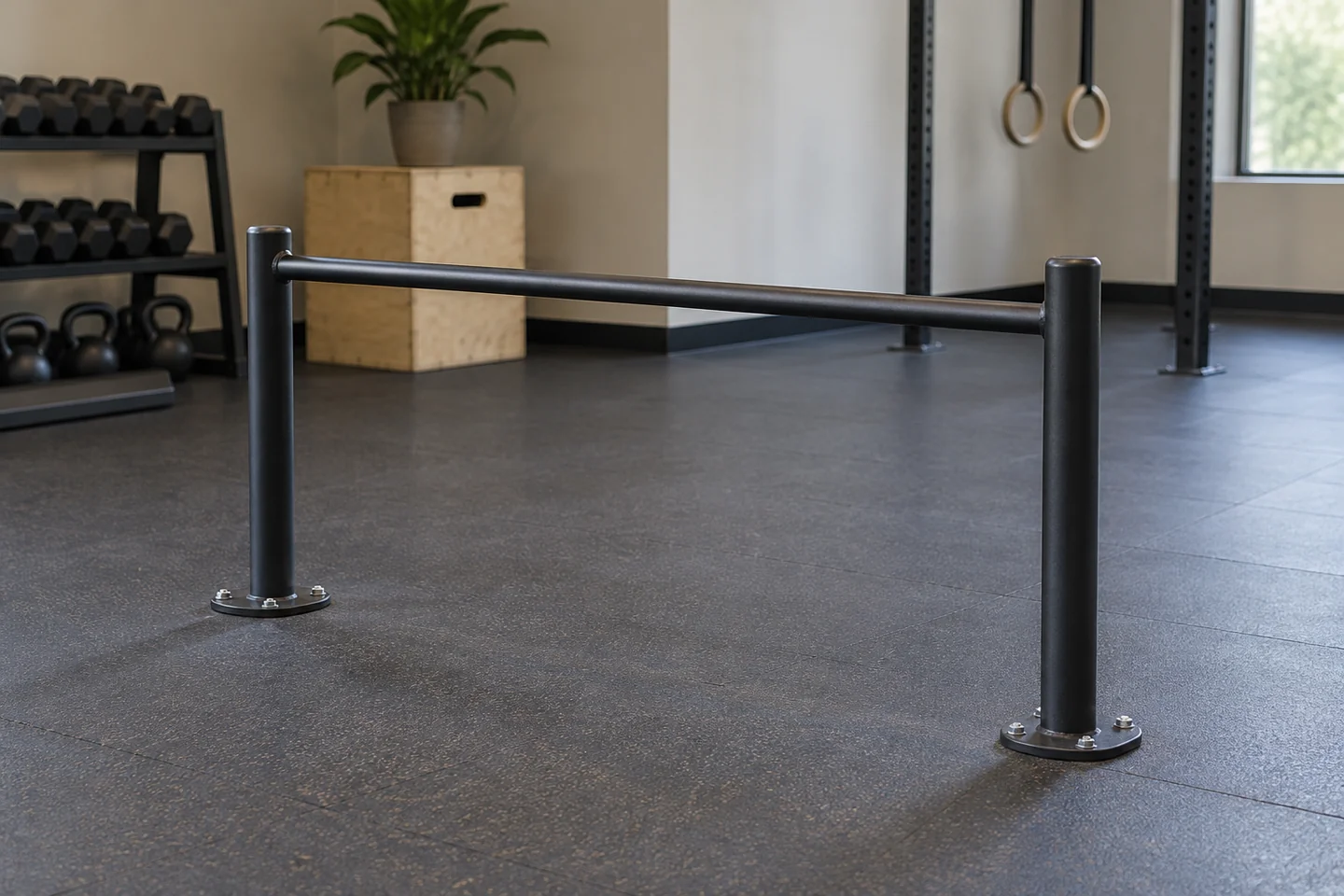
Choose equipment designed to bear the load and remain stable: a fixed exercise rail or a suitable stable bench in a gym, for example. Ask staff which surface they recommend. A lightweight table, chair back or bench on wheels can move in the direction you are pushing, even if it seems strong enough when pressed straight down.
Check that the gripping surface is dry and free of sharp edges. Your hands need a secure position without crowding against brackets or a wall. The floor behind you must also provide traction. A support that stays still is only half the setup if your feet can slide away.
Begin at a height that lets you control the movement easily. Place the hands comfortably, step the feet back and establish a steady body line before bending the elbows. You should be able to stop the descent and press away without the hips dropping separately from the shoulders. If that is not happening, choose a higher support or return to the wall version while learning.
Height changes more than appearance
A high fixed rail and a low bench are both elevated push-up supports, but they need not feel remotely similar. Lowering the hands generally increases the demand compared with a more upright version. That is why a small change in height may be a more useful progression than a large jump straight to the floor.
Do not compare repetition counts without considering the surface. Ten repetitions against a high rail and ten on a low bench describe different tasks. If you keep notes, record the support along with the count. A simple description such as the fixed rail beside the studio door can be enough when the height is not marked.
Foot position also matters. Moving the feet changes the body angle and can change where you meet the edge at the bottom. Find a position that allows a comfortable hand, shoulder and torso relationship rather than stretching as far away as possible. Rehearse a shallow repetition before committing to a deeper one.
Make the edge easy to approach
Lower under control, allowing the elbows to bend without forcing them into an extreme position. Keep the head from reaching ahead of the body. You are not trying to strike the bench with the chest or chin. Leave a margin that lets you reverse the movement smoothly.
If the hands are on the edge, think about their contact throughout the set. A rounded or narrow edge may feel less secure than a broad surface. Do not compensate by gripping harder while the wrists become uncomfortable. Change the support and, if needed, ask an instructor to check the setup.
A mirror on one side can tempt you to twist your neck during each repetition. Check the arrangement before the set or review a short recording afterwards where appropriate. The exercise itself is easier to judge when you keep looking in a consistent, comfortable direction.
End before the support becomes a rescue
As the set gets harder, it can become tempting to collapse onto the surface and then push yourself back into place. Stop while you can still leave the position deliberately. Step closer, stand up and rest. A clear end to the set is preferable to an improvised struggle against the bench edge.
If you want a harder version later, change one feature at a time. Use a slightly lower approved support while keeping the movement controlled, rather than simultaneously narrowing the hands, increasing depth and moving the feet farther back. Each change adds information; making several together can make the result difficult to interpret.
Before using a shared bench, ask whether it is intended for this purpose and whether anyone is currently using it. Some pads or frames may not be suitable for pressure at the end, even though they are designed for a person lying along the bench. A fixed rail avoids some of those questions but still needs an appropriate height and sound mounting. Do not attach a bar to an unfamiliar rack as a push-up support without learning how its safeties and position locks work. The appearance of a sturdy object is not the same as knowing its approved use.
There is no required timetable for reaching a floor push-up. A stable elevated version may remain useful for practice or for a particular session. The question is whether you can repeat the intended movement comfortably on sound equipment, not whether the support looks low enough to satisfy a comparison with someone else.