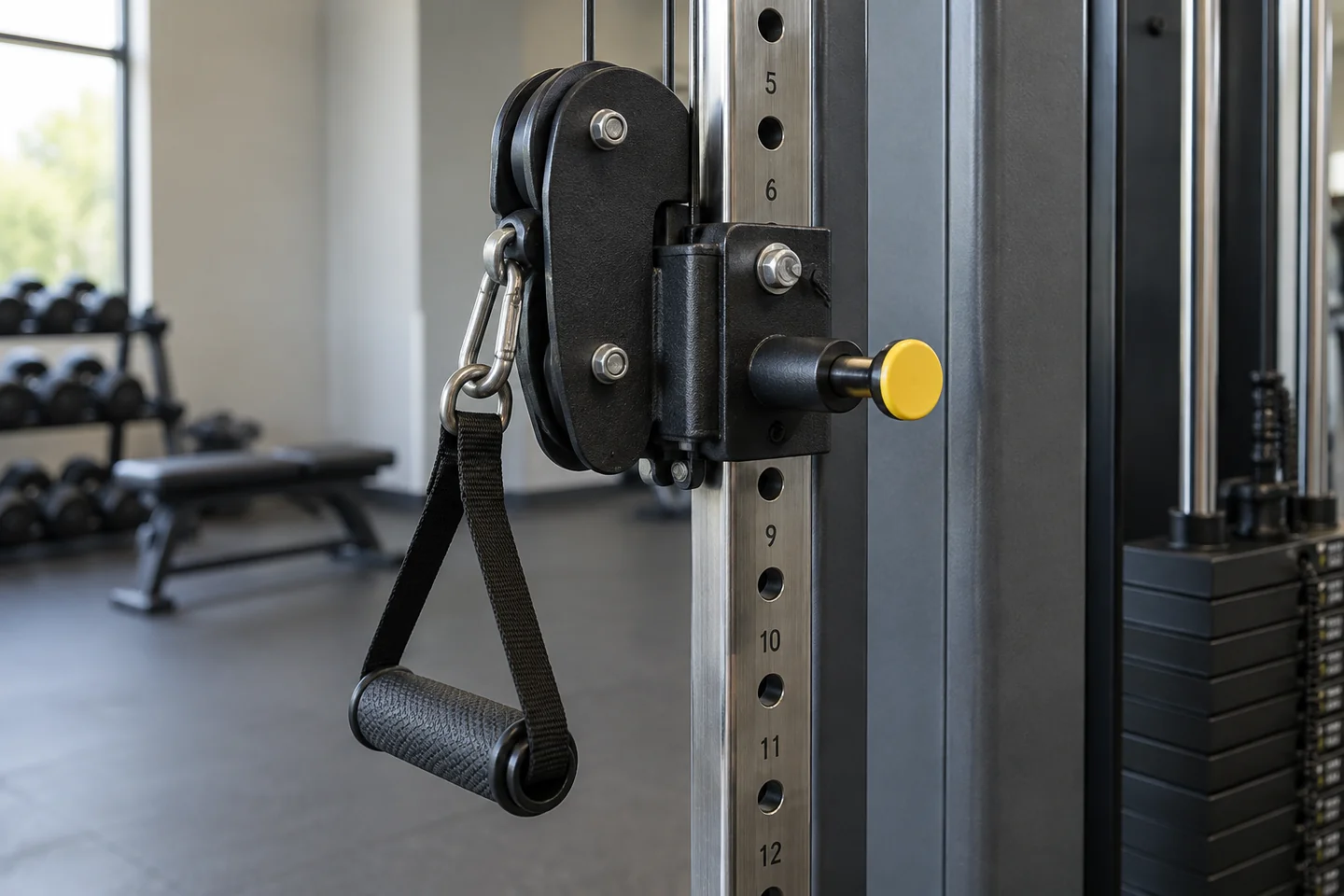
Find the intended line of pull
Start with the exercise instruction. A pressdown uses a high pulley; a low row uses a different line; other movements may call for a pulley around torso height. Setting every exercise at the same notch because it is convenient changes the task. If the description is vague, ask a trainer to show the position on the actual machine.
Move the carriage only when the cable is unloaded and the stack is resting, as the manufacturer directs. Support the carriage as needed, release the adjustment and engage it fully at the chosen height. Give the locking position a careful check before attaching resistance. Keep fingers away from the rail and moving parts.
The numbered hole can be useful for your notes, but the number is not a universal height. Different cable columns use different scales and pulley arrangements. When you change gyms, identify the relationship to your body and exercise rather than hunting for a familiar number.
Check where you stand
The pulley height and your distance from it work together. Standing very close can crowd the handle path; stepping far away can pull the cable at an angle you did not intend. Rehearse the motion with a light resistance and make sure the attachment can move without hitting the frame or your body unexpectedly.
Look at the cable over the whole trial, not just at the starting position. It should follow the machine's intended route without rubbing an edge, catching clothing or crossing someone else's station. If the exercise requires an improvised angle around the frame, stop and ask whether that station is suitable.
Changing the handle can also alter the usable space. A long rope and a short bar will not necessarily finish at the same point even with the pulley unchanged. Recheck your stance when switching attachments, especially if the cable stop approaches the pulley earlier than expected.
Treat an adjustment as a fresh trial
After moving the carriage, begin gently. A familiar stack number can feel different when the resistance direction changes. Do not assume that setting the cable higher or lower is merely cosmetic and carry on at the same effort without checking.
If the carriage is above your comfortable reach, ask staff to move it rather than climbing on the frame. A platform not designed for that purpose can create a fall hazard before the exercise begins. Likewise, do not pull on a loaded cable to help yourself operate a stiff adjustment. Difficulty moving the control may mean the mechanism needs attention, and the correct response is to have it checked.
At the end, return the resistance to rest before adjusting anything again. A simple record of pulley height, attachment and exercise name gives you a useful setup description. It is far more informative than a photograph of the weight stack alone, because it captures the choices that determined where the resistance came from.