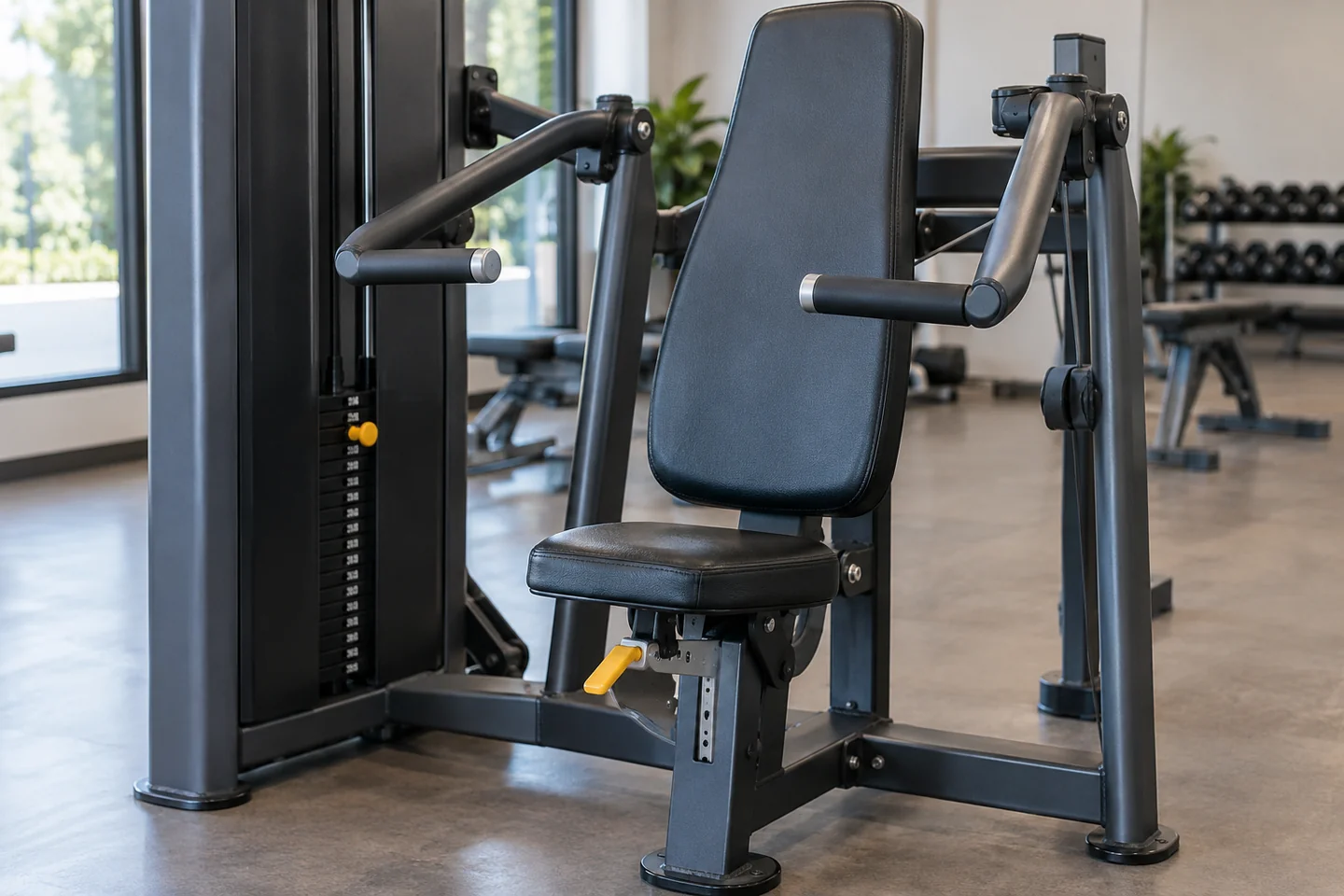
Find the handles at a useful height
Read the model's diagram and identify the seat adjustment. With your back against the pad, the handles should meet you around chest height as the machine specifies. If they are near your shoulders or low against the ribs, change the seat rather than sliding into an unsupported position. Keep your feet settled on the floor or the intended foot support.
Some machines also adjust the handles' starting distance. A deep start that pulls the elbows far behind the body is not something to accept automatically. Ask a staff member how to change it if the position feels stretched or difficult to enter. Adjust with the mechanism resting and make sure the pin or lever locks completely.
The first trial should be light enough to check the arrangement without a struggle. Press smoothly and return with control, keeping your torso supported. Avoid reaching so far forwards at the end that the shoulders roll away from the pad. The machine's arms may travel farther than you need them to for a controlled repetition.
Distinguish reach from resistance
If you can press the handles but cannot return them comfortably to the start, the issue may be the starting position or load. Stop and reassess rather than bouncing out of the bottom. An awkward first push is not a useful initiation ritual; it is information about the setup.
Keep the hands on the intended gripping surfaces. Some machines offer several handle orientations. Choose the one described for the version you are learning, rather than changing the grip halfway through a repetition. A different grip may alter how the machine feels, so recheck the seat relationship when you switch.
It can help to ask staff to watch one light repetition after you make an adjustment. A short confirmation of seat height and handle depth is more useful than guessing from the machine next to you. If no comfortable setting exists, another pressing exercise may fit better. Equipment dimensions do not suit every person equally well.
Make the next visit simpler
Note the seat setting and any start-position adjustment, along with the machine's location or model. Many gyms contain more than one chest press, and a remembered number can be misleading on the other version. Check that both controls still match your note before selecting the working resistance.
At the end, return the handles to rest gently and release your grip only when the mechanism is settled. Leave space for the arms to return without catching clothing or belongings. A chest press is not just a push away from the body: entering the position, controlling the return and leaving the machine should all feel organised.