Check the object in your hands
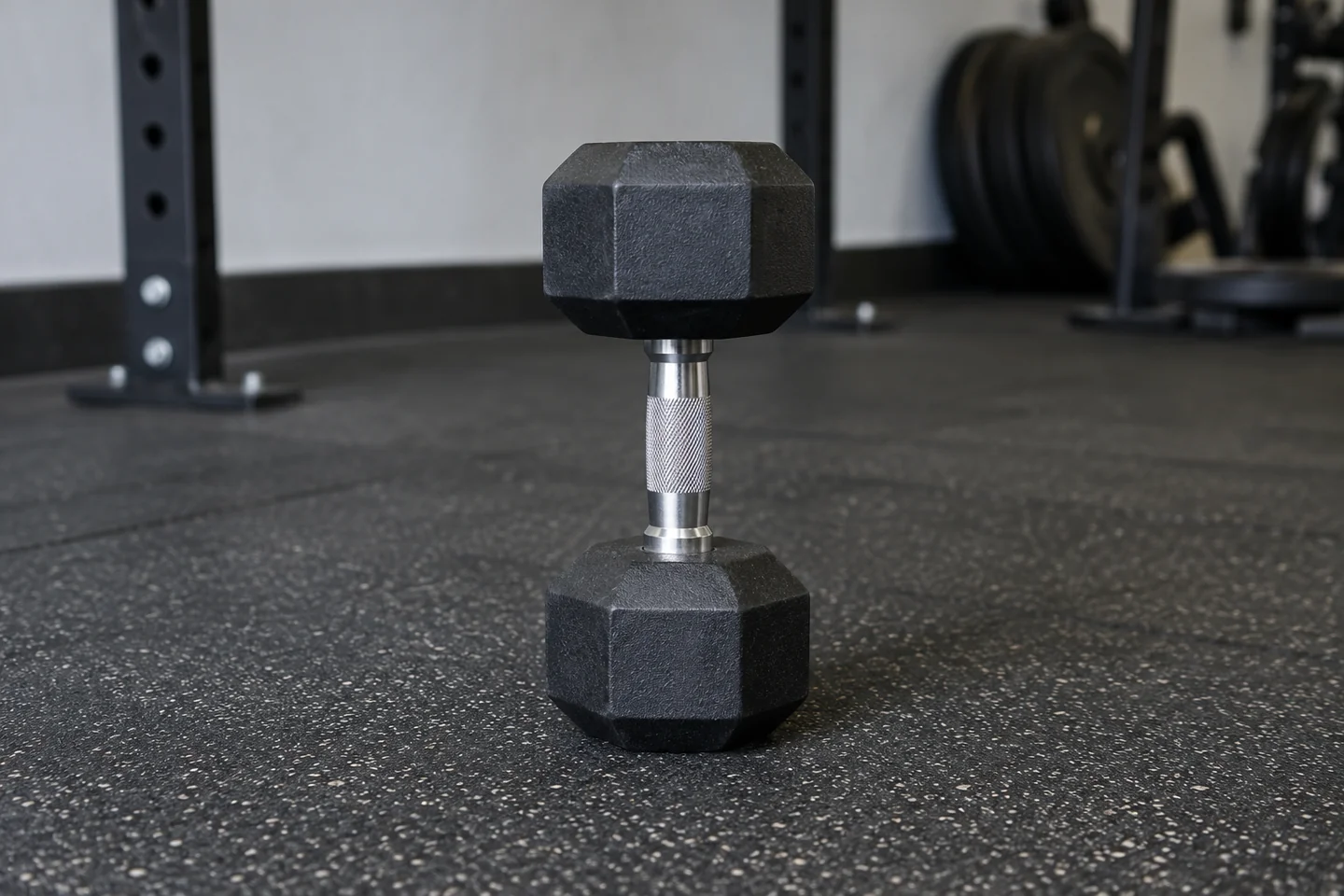
A goblet squat commonly uses one weight held close to the chest with both hands. For a fixed dumbbell, many people support one end with the palms while the handle points down. That arrangement is only sensible when the dumbbell's shape gives a secure grip. Start with a modest weight and establish the hold while standing still. Do not begin descending while your fingers are still searching for a place.
Adjustable dumbbells need special care. Their ends, selectors and removable plates are not automatically approved as handholds. Read the manufacturer's exercise and handling instructions; do not assume a position used with a solid hex dumbbell transfers to a selectorised model. A different implement may be the better choice if the intended grip is not permitted.
Keep it close without squeezing it against your throat
Hold the weight in front of the upper torso with room to breathe and see ahead. Keeping it close is different from pushing it into the neck. Your wrists should not be forced into a sharply bent position just to keep the ends from slipping. If the grip feels precarious before the first repetition, change the weight or ask for help choosing a suitable implement.
Rehearse picking it up and putting it down. The final transfer to the floor or rack can be more awkward than the squat itself when the weight is held vertically. Choose a clear landing place and keep fingers away from the underside as the dumbbell comes to rest. Do not balance it on an unstable edge between sets.
During the squat, a tiring grip can make the weight drift forwards. End the set before you are chasing it away from the body. That may happen before the legs feel especially tired, and it still gives you useful information about the setup. There is no requirement to choose a heavier goblet simply because another squat variation uses more weight. The exercise includes holding the object; a secure hold is part of the task.