Name the problem before changing it
There is a difference between a forearm becoming tired, a handle slipping and a joint hurting. Describe what you actually notice. Are the fingers gradually opening? Does the rubber coating feel slick? Is a hard edge pressing into the palm? A specific observation helps you choose an equipment adjustment instead of making a vague decision that your grip is simply weak.
Put the weight down before inspecting it. Wipe a wet handle using the gym's approved method and let it dry. If a covering is loose, torn or rotating unexpectedly, report the equipment rather than wrapping a towel around it to keep using it. A towel can change the diameter and security of the grip as well as cover the defect.
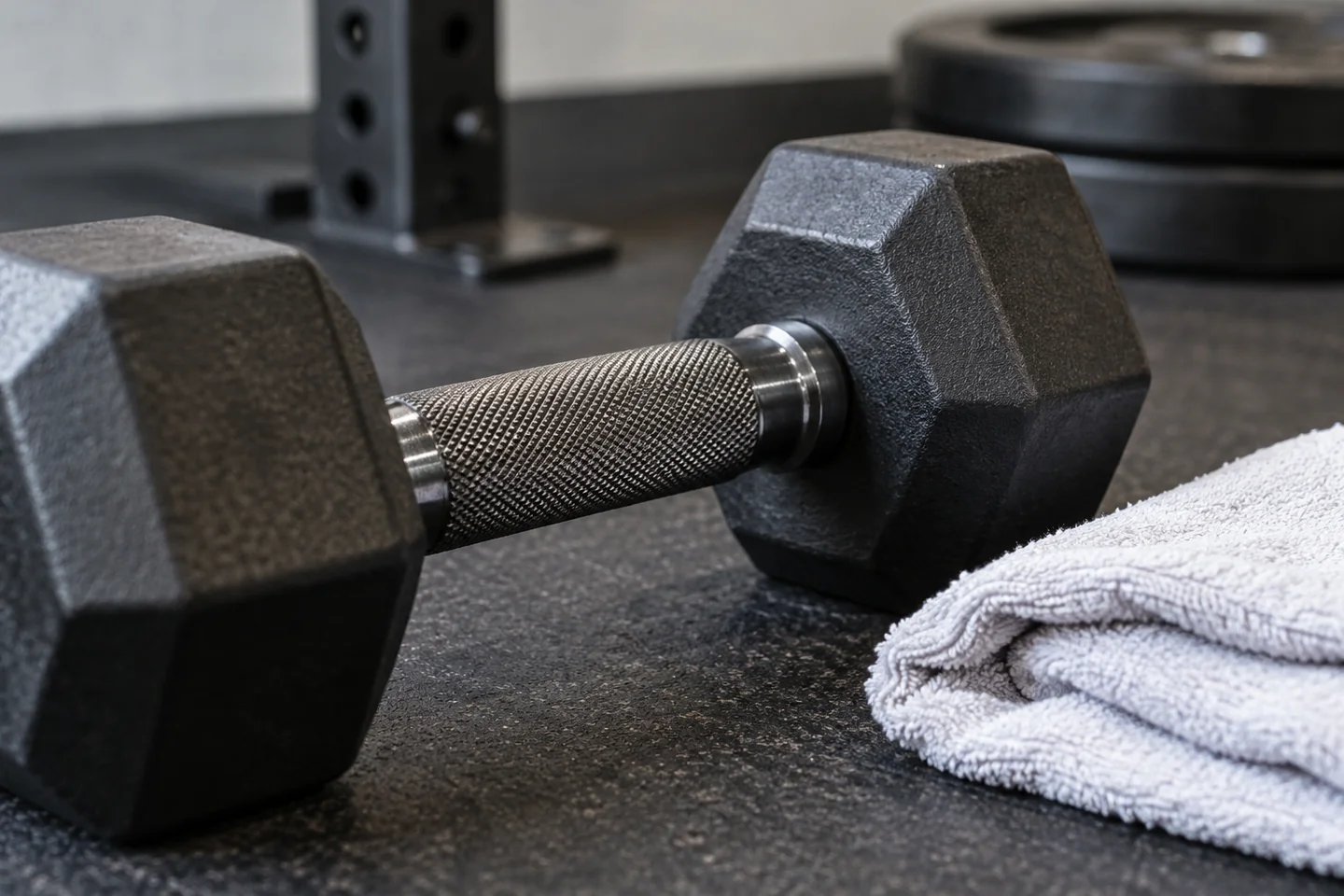
Compare the handle to another suitable implement. Dumbbells marked with the same weight can have different thicknesses, textures and lengths. A thick handle may be harder for a smaller hand to enclose; a very abrasive one may be uncomfortable even when the load is modest. Neither difference is visible in the number printed on the end.
Keep the exercise and the handle compatible
A cable attachment can offer a more comfortable wrist orientation, but changing it may also change the reach and movement path. Recheck the setup after the swap. A close neutral handle and a wide straight bar are not interchangeable in every respect just because they fit the same clip.
With adjustable dumbbells, hold only the surfaces approved by the manufacturer. Selector dials and removable plates are not general-purpose handles. This matters for goblet positions and other exercises where people sometimes grip the ends rather than the central handle. If the intended hold is not permitted, choose another implement.
Avoid balancing a heavy object in the fingertips to preserve a repetition count. If the hands cannot retain it securely, the set is over. The place where you put it down should already be clear. A loaded carry or row that is limited by the grip still provides useful information, but it is not a reason to wait until the object falls.
Treat aids as a separate decision
Gloves, chalk and lifting straps solve different problems and have different rules of use. Gloves can change handle thickness; chalk may not be permitted in a gym; straps require instruction and do not repair an unsuitable load or damaged handle. Do not buy an aid before understanding the issue you want it to address.
For a beginner, choosing a manageable load and a suitable handle often makes the task clearer. If you are considering straps for a specific exercise, ask a qualified instructor to demonstrate how they are fitted and released. They should not be used to keep holding a weight through pain or to bypass an equipment problem.
Persistent numbness, sharp pain or symptoms that do not settle are not ordinary equipment-selection questions. Stop the provoking exercise and seek appropriate advice. Changing the grip can alter comfort, but it cannot tell you why a symptom is occurring.
Record the useful equipment detail
If one handle works well, remember its shape rather than only its colour. Gyms replace attachments, and colours often identify a brand rather than a particular grip. A note such as parallel handles with a wider central gap is more useful than 'the black one'. Where permitted, a photo of the attachment by itself can help.
At home, consider handle dimensions before buying a larger set. If possible, hold the product in person or check measurements and the return policy. A weight that stores compactly can still have a long handle assembly that meets the body during a curl or press.
An exercise can also change when the hands are placed differently on the same handle. Holding a dumbbell close to one end may make it tilt, while moving the hands wider on a bar changes the arrangement of the arms. Use the position taught for the exercise and check whether it remains consistent. Marks or textured sections can provide a reference, but do not add tape to shared equipment without permission. If you keep moving your hand to avoid an uncomfortable spot, put the load down and address that contact instead of turning the set into a search for somewhere tolerable to grip.
The aim is a secure contact that lets you pay attention to the exercise. Once the handle stops being a constant distraction, you can judge the movement itself more clearly. That is a better reason to change equipment than chasing an accessory advertised as a shortcut to stronger hands.