Give the movement a clear job
A hinge asks your hips to move backwards as your torso inclines forwards. Your knees soften, but you are not trying to sit as low as possible. That distinction matters because a beginner can turn every attempt into a squat, or keep the knees rigid and reach down through the back instead. Neither response means you are incapable of learning it; the instruction may simply be asking too much at once.
Practise without a load in a space where you can move freely. Begin standing comfortably, then send your hips back a short distance. Let the torso follow rather than reaching towards the floor with the hands. Return to standing without leaning behind your heels at the finish. The first movement can be small. A deeper bend is not automatically a better demonstration of the pattern.
A wall behind you can provide a reference, provided you are close enough to touch it gently without falling backwards. Start near it, move the hips towards it and stand again. If you must rock your whole body back to find the wall, shorten the distance. This is a way to make the direction obvious, not a test of how far you can stand from a wall.
Use feedback that does not become another obstacle
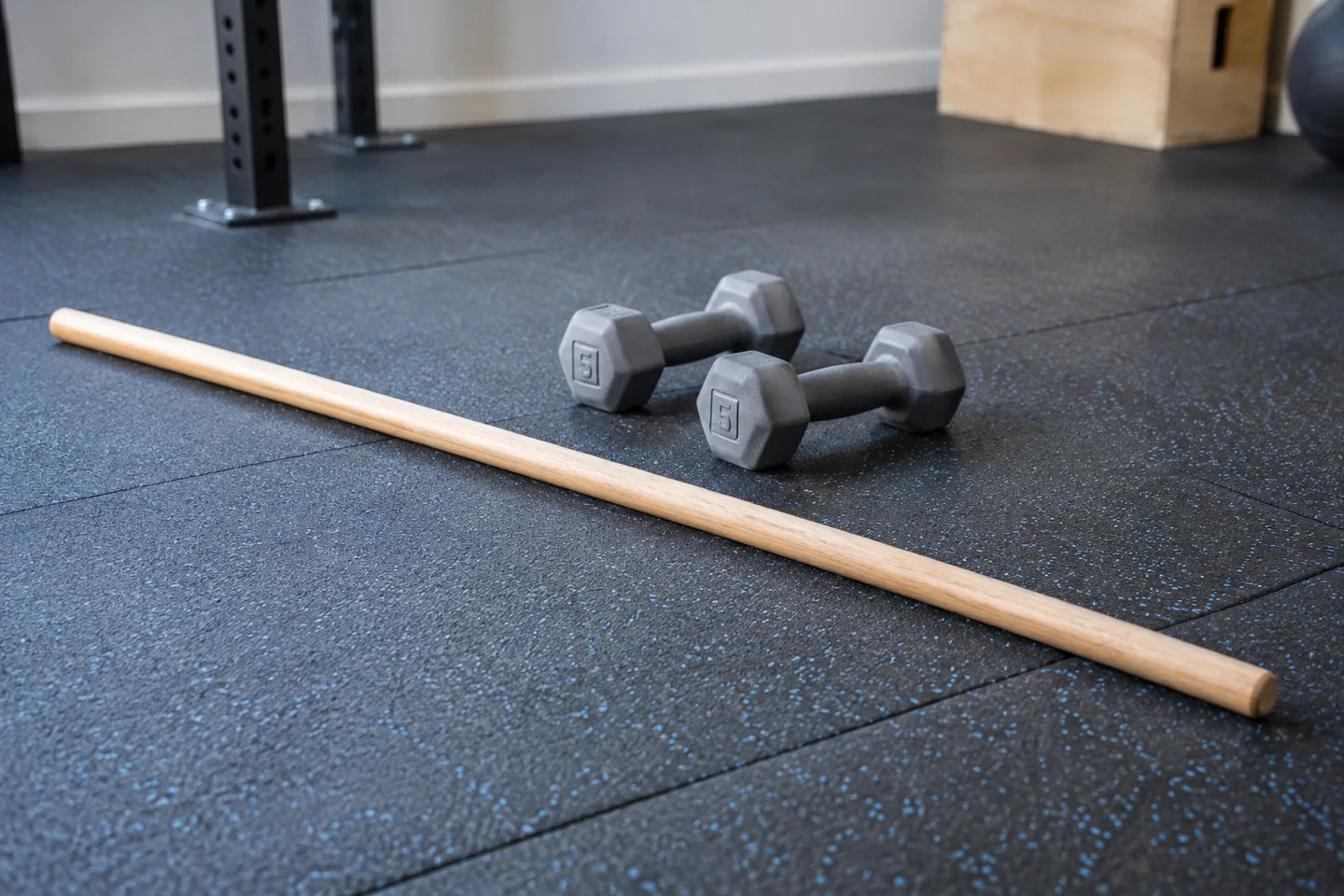
A light dowel held along the back is sometimes used to show whether the torso position changes greatly. The American Council on Exercise describes a version with contact near the head, upper back and pelvis. Those contact points are feedback, not a reason to force your neck or shoulder into an uncomfortable position. Someone with limited shoulder movement may find a side view or a trainer's observation simpler.
If you use a dowel, first find a comfortable standing position. Make a short hinge and see whether the contact changes abruptly. You do not need to press the lower back flat against the stick. Nor should you lift the chin sharply to keep the head touching it. Put the dowel aside if managing it distracts you from moving normally.
A mirror can help between repetitions, but turning your head throughout the movement changes what you are doing. A brief recording from the side is another option where filming is permitted and other people are not included. Watch it after setting everything down. Look for the hips travelling back and the movement staying controlled; do not diagnose your spine from one phone angle.
Know what the floor does not tell you
The floor is a fixed surface. Your proportions and current movement range are not fixed to the height of a particular dumbbell. Reaching the floor is therefore a poor first target. If you eventually practise with weights, their starting height should let you establish the position you have been learning. A qualified trainer can help choose an appropriate variation and support height.
It is common to see a hinge demonstrated with a bar, kettlebell or pair of dumbbells. Those are different setups, even when the underlying direction of movement is similar. Do not assume that understanding an unloaded hinge means you should immediately try a heavy deadlift, a fast kettlebell swing or an advanced single-leg exercise. Each adds demands that deserve their own explanation.
Notice where the trial ends. If you can move a little farther only by changing the torso position abruptly, that is useful information about today's controlled range. It is not a challenge to force past. A stretching sensation and pain are different experiences; stop if the exercise hurts rather than treating discomfort as proof that the correct muscles are working.
Add one difficulty at a time
Once the basic direction is familiar, you might practise holding a very light object close to the body. Keep the movement slow enough to stop and return without a jerk. Avoid combining a new load with a much deeper range and a faster speed in the same attempt. It becomes difficult to understand what changed when three demands arrive together.
The return to standing deserves as much attention as the descent. Finish upright, not with a dramatic backward lean or a shrug. Set the object down deliberately before discussing the repetition or checking a screen. If the weight is awkward to put down, simplify the setup before repeating it.
A cue that works for one person may not be the cue that makes the direction clear for you. If thinking about sending the hips back helps, keep that. If the wall reference is clearer, use the wall. Avoid stacking several instructions about knees, ribs, shoulders and head into one attempt. Ask the instructor to prioritise the single change that matters most for the trial. You can add another detail once the basic direction is recognisable, with each new cue solving an observed problem instead of competing with all the others.
A useful first session might leave you with a clearer distinction between bending at the hips and simply reaching down. That is a worthwhile result even if the weight stays on the rack. The next time you encounter a hinge-based exercise, you will have a movement reference to discuss rather than only an instruction to copy a shape.