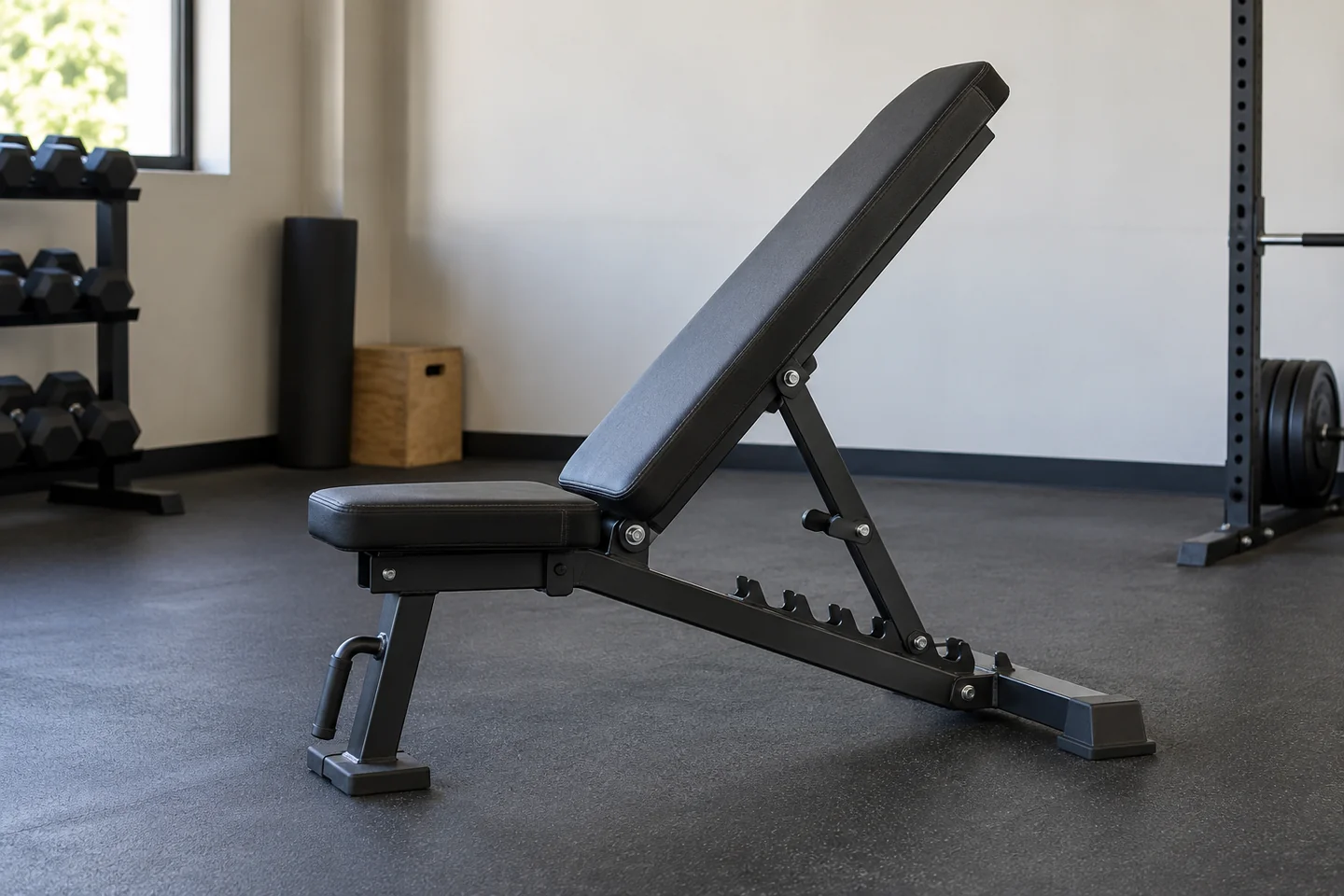
Adjust with nothing in your hands
Find the backrest control and, where present, the seat control. Lift or move the backrest according to the manufacturer's instructions, then check that the pin, ladder support or locking mechanism is completely seated. Do not balance the backrest between positions. Keep your fingers away from the closing joint as you lower it.
An incline is not one universal angle. A modest slope and a nearly upright backrest create different pressing positions. Use the setting specified for your exercise, or ask a trainer to show an appropriate starting arrangement. There is no benefit in choosing the steepest available notch simply because it looks more demanding.
Check the whole bench
Look at the feet and surrounding floor. A bench that rocks, slides or sits partly on a loose mat needs attention before use. Sit down without weights and confirm that your feet can find stable support and that you are not sliding down the pad. If the seat angle adjusts, it may help you remain positioned, but follow the model's intended settings.
Leave room to bring the dumbbells into position and put them down afterwards. Moving the bench close to a wall may save floor space while removing the room your elbows need. Check both sides, particularly if another bench has been moved nearby since your last set.
If the adjustment makes an unexpected movement after you sit, get off and ask staff to inspect it. Do not attempt to hold a loose backrest in place with your body while carrying weights. Once the bench is sound and the angle is right, note the setting if you want to repeat it. A picture of the support position, where permitted, can be clearer than remembering that it was 'a little upright'. Also check whether moving the backrest changed the gap between the pads, so your seated position still feels secure. The equipment check comes before the pressing effort.