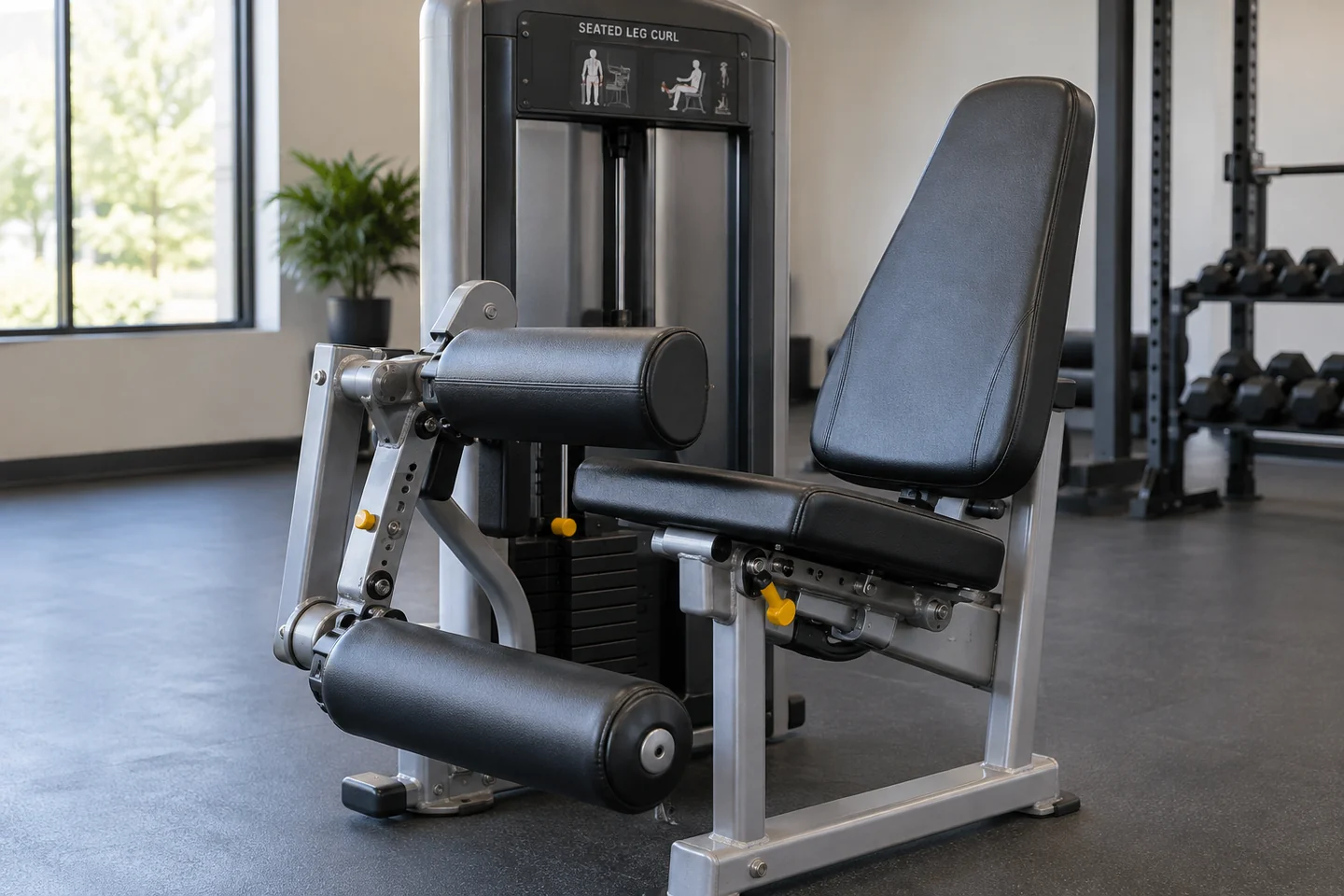
Start with the seat and pivot
Look at the machine's diagram before moving the pads. Different models use different levers, and a setting number from one gym may mean nothing at another. Ask for a demonstration if you cannot identify which adjustment moves the backrest and which changes the starting position. Make changes while the machine is at rest.
Sit back into the support and check where your knees line up relative to the machine's pivot. The maker's instructions will show the intended relationship. If the seat is too deep, you may slide forwards to reach the lower roller; if it is too shallow, the thigh support may sit awkwardly. Establish the seat position before tightening the restraint.
The lower roller should contact the lower leg in the position specified for the model, rather than pressing directly into the back of the knee. Check both legs instead of arranging one and assuming the other has landed identically. Shoes with bulky heels can also change how the contact feels, so keep the placement deliberate.
Lower the thigh pad with care
The thigh restraint helps keep you positioned while the knees bend. It should be secure without being painfully compressed. Do not force it down simply because the previous user selected a lower notch. If it will not secure comfortably, ask staff whether another adjustment or another machine is more appropriate.
Select a light resistance and make a small trial. Curl smoothly, then allow the roller to return under control. Keep your pelvis and back supported rather than sliding forwards to finish the repetition. The return should not end with the stack crashing down or the knees being pulled suddenly straight.
A moving seat or unexpected click deserves attention. Stop and check the lock rather than assuming the noise is normal. It is also worth checking that a bag, headphone cable or loose item is not close to the lever arm. Small machines can have a larger moving envelope than their seat suggests.
Keep a usable record
If several adjustments are numbered, record the relevant ones together. A note that says only the weight will not tell you how the machine fitted last time. You might need the backrest position, thigh pad notch and start-angle setting, depending on the design.
The goal is not to bend the knees through every degree the machine permits. Use the range you can control comfortably within its intended operation. If a pad feels sharply uncomfortable or the motion hurts, stop and get the setup checked. Increasing the load will not solve poor alignment, and there is no benefit in finishing a set while trying to wriggle away from a roller.