Start with the task and the setting
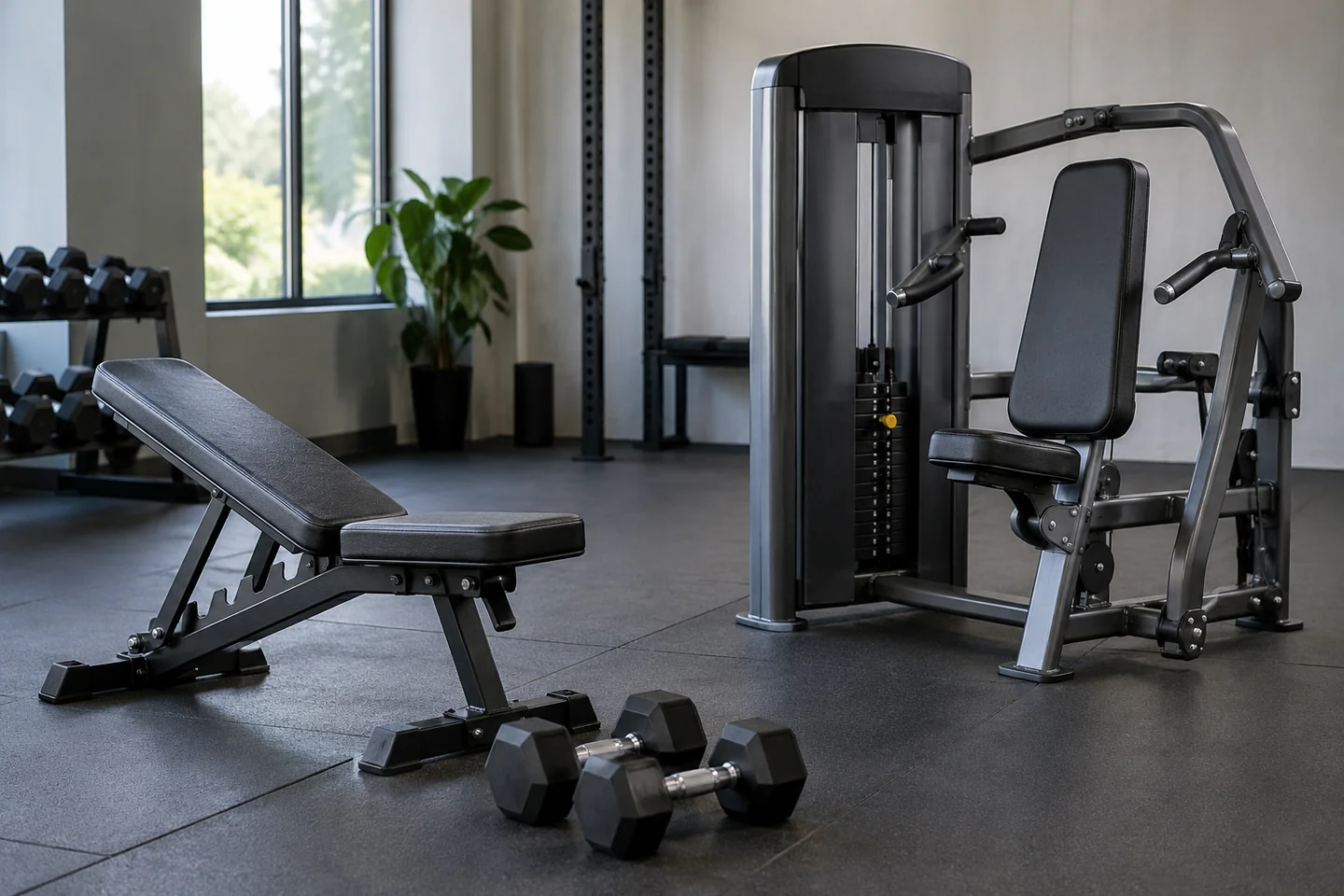
A machine may provide a seat, back pad and defined movement path. Dumbbells ask you to control the objects more freely and often require a separate bench or floor setup. Neither arrangement removes the need to learn the exercise. A machine still has adjustments and a safe entry; free weights still need suitable space and a manageable load.
For a first session in an unfamiliar gym, a well-fitted machine with clear instruction can make one task easier to understand. In a small home space, a pair of dumbbells may be the available tool. These are sensible practical reasons for selection. They do not establish a universal hierarchy of effectiveness.
Ask whether the equipment fits you. A machine with a fixed path may feel comfortable for one person and poorly aligned for another. A dumbbell's freedom can help you find a workable hand position, but it also means you must guide each weight. The useful choice is the one that lets you perform the intended exercise with control and appropriate guidance.
Compare the whole setup
Consider a chest press. The machine may let you sit down, adjust the seat and select a stack. A dumbbell press requires collecting two weights, arranging a bench, getting into position and putting the pair down afterwards. Those extra tasks matter when deciding what is manageable in a busy room or at the beginning of learning.
Now consider a row. A cable station may be comfortable but unavailable during peak hours. A supported dumbbell row may be a workable alternative if you know the setup and have a suitable bench. It is still a different exercise arrangement, so begin with an appropriate trial rather than transferring the load number literally.
Time and access can be part of the decision without being the only factors. If changing equipment means learning a new movement while rushed, it may be better to choose another familiar exercise or ask for help. A backup option is useful when it has actually been learned, not merely because its name resembles the unavailable exercise.
Numbers do not transfer neatly
Ten kilograms on a cable stack does not necessarily create the same experience as a ten-kilogram dumbbell. Pulleys and lever arms change how the resistance reaches you. Different machines can also feel different from one another. Keep records within the same setup where possible, and treat a new station as a fresh trial.
This also explains why comparing your stack selection with someone else's dumbbell can be misleading. The equipment, range and support differ. A larger displayed number is not a complete description of strength, effort or progress.
If you track an exercise, include the equipment type and relevant settings. 'Seated chest press, seat four' is more useful than 'press, twenty'. For dumbbells, note whether the movement was seated, standing, on a bench or on the floor. Those details preserve the actual task you performed.
Keep room for a mixture
There is no requirement to commit to only one equipment category. A programme can use machines for some movements and free weights for others, depending on goals, experience, access and fit. A qualified trainer can help make those choices without presenting one tool as a moral upgrade over the other.
The same person may choose differently on another day because the space or available equipment changes. That is not inherently a problem, but it should be an informed substitution. Learn how the alternative is set up and avoid assuming it shares every detail with the original.
Availability also affects how much setup you must remember. A machine used every week may be familiar, while a free-weight alternative attempted only once may still require a demonstration. Keep a small list of genuinely learned alternatives rather than an extensive list of names. When the usual station is busy, you can choose from that list without inventing a movement under time pressure. If no suitable alternative is familiar, ask staff or rearrange the session sensibly. Waiting briefly for equipment can be a better choice than rushing into a new setup solely to avoid standing still.
There is also a difference between learning a movement and testing a replacement during a busy session. You might arrange a quiet induction to practise the alternative, then use it later when the usual equipment is occupied. That gives you time to ask about seat settings or dumbbell handling without feeling that a queue is waiting behind you. Take a note of the setup while it is fresh. The next substitution then becomes a choice between two understood tasks rather than an improvised attempt to imitate one tool with another. Familiarity is a useful part of access, and it can be built before you need the backup.
When unsure, ask a concrete question: which option lets me practise this movement in the available space with a load I can control? The answer may be a machine, a dumbbell or an unloaded version. Equipment earns its place by helping you carry out the task, not by fitting an identity as a particular kind of gym user.