Check the route before lifting
Notice where the pair belongs and whether you can reach that space comfortably. Some racks have cradles at several heights, and the lowest row may require a different approach from the top. Keep your bag and water bottle out of the path. A clear route now prevents an awkward search while your hands are occupied later.
Choose weights you can handle throughout the session, including pickup and return. If you need help moving them, ask before beginning. Do not assume that being able to press a pair while lying on a bench means carrying it across the room will be equally manageable.
Place, then release
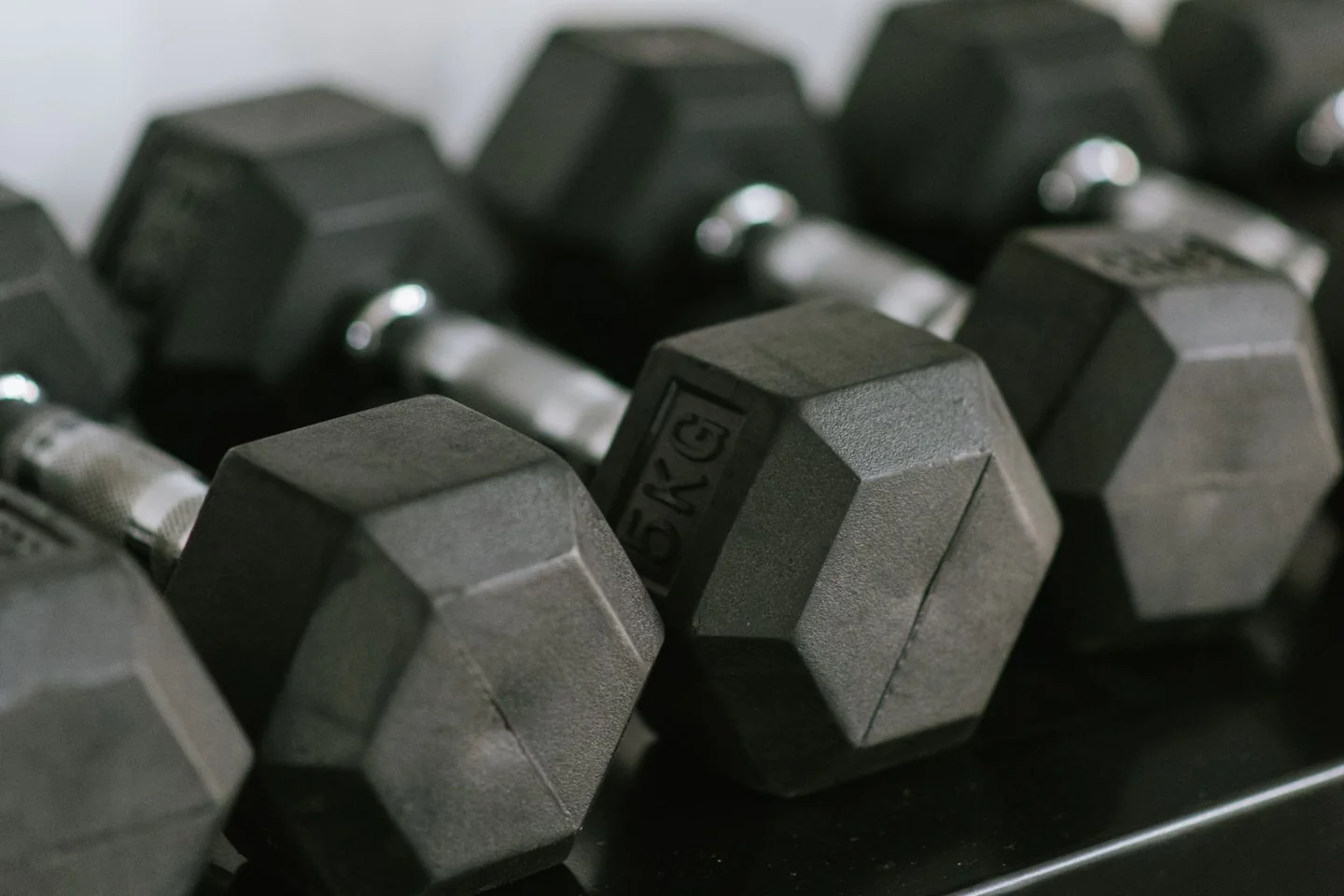
At the rack, position the dumbbell securely in its designated support before letting go. Keep fingers away from the contact area and do not crowd another person's hands. Return one at a time if that is the controlled approach for the rack and load. Avoid tossing a weight into a cradle and hoping it settles.
Read the labels rather than forcing a pair into the nearest gap. Dumbbells left in the wrong place make the next person's selection harder and can lead to mismatched pairs. If a cradle is occupied incorrectly, ask staff or rearrange only what you can handle safely once your own load is down.
If the route becomes blocked, put the weights down in an appropriate clear area rather than stepping around someone at close range. Wait until the rack is accessible. A few seconds of patience is easier to manage than a collision with another person carrying equipment.
At home, the same principle applies to a low stand or storage shelf. Check its capacity and stability; a decorative shelf is not automatically weight storage. Keep the landing area free of loose bands and cables. The set ends with the weights supported and your hands clear, not with an uncontrolled drop after the final repetition.