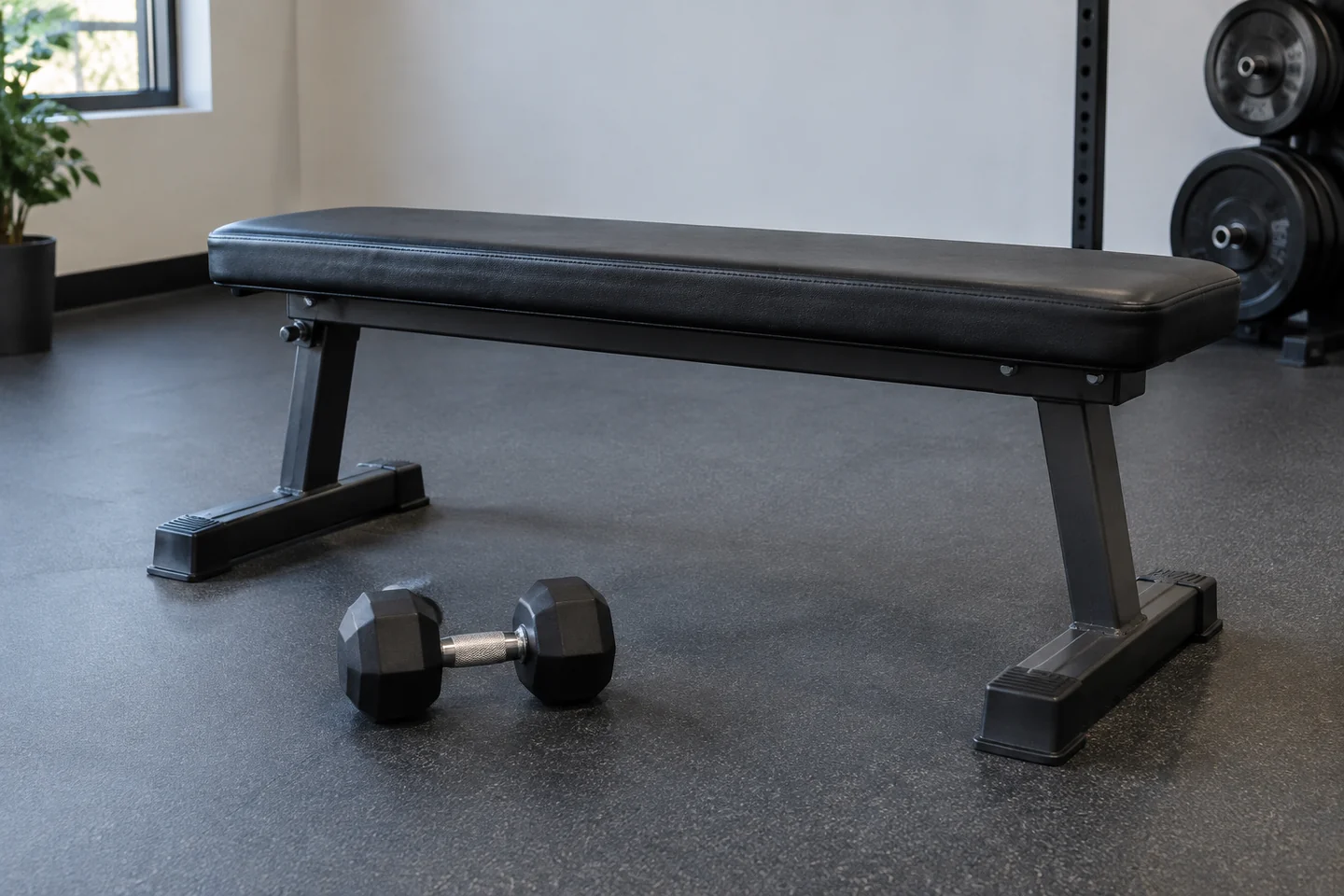
Arrange the bench and weight together
Choose a stable flat bench with clear space beside it. Place a light dumbbell where you can pick it up without reaching far across the body. A trainer can demonstrate the supported stance: common versions use one hand and one knee on the bench, while others keep both feet on the floor and use one hand for support. Learn one arrangement clearly before switching between them.
The bench height and length influence the setup. If you cannot place the supporting hand comfortably while keeping a manageable torso position, do not force yourself into the shape of a photograph. Another support or a different row variation may fit better. The point of support is to simplify the task, not to make you stretch from one contact point to another.
Before lifting, check that the dumbbell has room to hang without hitting a bench leg or your planted foot. This is especially relevant with long adjustable dumbbells. A compact weight in a demonstration may clear a space that a larger one cannot.
Let the arm move without throwing the torso
From the supported position, draw the dumbbell upwards in the path you have been taught, then lower it under control. Keep the movement smooth rather than jerking the shoulder and torso to start it. The bench gives you a reference from which to notice whether you are rotating dramatically with each repetition.
You do not need to pull the elbow as far behind you as possible. More travel is not automatically better if it comes from twisting the whole body or pushing the shoulder into an uncomfortable position. Use a comfortable range and a load that lets you guide the weight both ways.
Keep the neck in a comfortable continuation of the torso. Looking up into a mirror for the entire set can change that position. If you want feedback, ask someone to watch or check a recording between sets where filming is appropriate. Avoid looking sideways at the moving dumbbell on every repetition.
Check the support pressure
Your supporting hand should be placed securely, with a wrist position you can tolerate. If the bench edge forces an awkward bend, adjust where the hand sits or choose a different supported arrangement. Do not balance on fingertips at the corner of the pad while attempting to row a heavier weight.
For the knee-supported version, a torn pad or a narrow bench can make contact uncomfortable. For the two-feet version, the floor space and stance matter more. Neither setup is universally superior; they simply organise the support differently. An instructor can help select the version that fits your proportions and the available equipment.
Notice whether the support itself moves. A sliding bench or one that rocks when you shift position should be taken out of the setup. Do not use more pressure from the supporting arm to pin unstable equipment in place. Resolve the equipment issue first.
Changing sides deserves a reset
Put the dumbbell down before walking around the bench or moving your support points. Check the new side's clearance rather than assuming the room is symmetrical. A rack, wall or another person's equipment may be much closer on that side. Start the second side with the same deliberate arrangement.
It can be useful to use one dumbbell for both sides so that the handle and dimensions remain familiar. If you use two, confirm that they are the same marked weight and design. Similar-looking dumbbells sometimes come from different sets and have slightly different grips.
Clothing can make a difference at the support points. A slippery sleeve under the hand or loose fabric beneath the knee can shift as you move. Arrange it before the weight is lifted, and keep drawstrings away from the bench frame. If you use a towel on the pad, make sure it does not bunch under the supporting hand or reduce grip. The towel should not conceal a damaged surface. These are ordinary contact checks, but resolving them first means you do not have to adjust fabric with one hand while the other is holding the dumbbell.
When the row is finished, place the weight down deliberately before standing upright and leaving the bench. Record the support version if you are tracking the exercise. A note that only says 'row' will not distinguish this from a cable row or an unsupported bent-over row, each of which changes the position you have to maintain. The clearer your setup description, the easier it is to repeat the exercise you actually intended.