Decide which version you mean
A seated dumbbell press, standing dumbbell press and machine shoulder press are different arrangements. Start with the version you have been shown. Sitting may remove some balance demands, but it does not automatically make an overhead movement suitable for someone with pain or restricted movement. If raising the arms is uncomfortable, seek individual advice before adding a load.
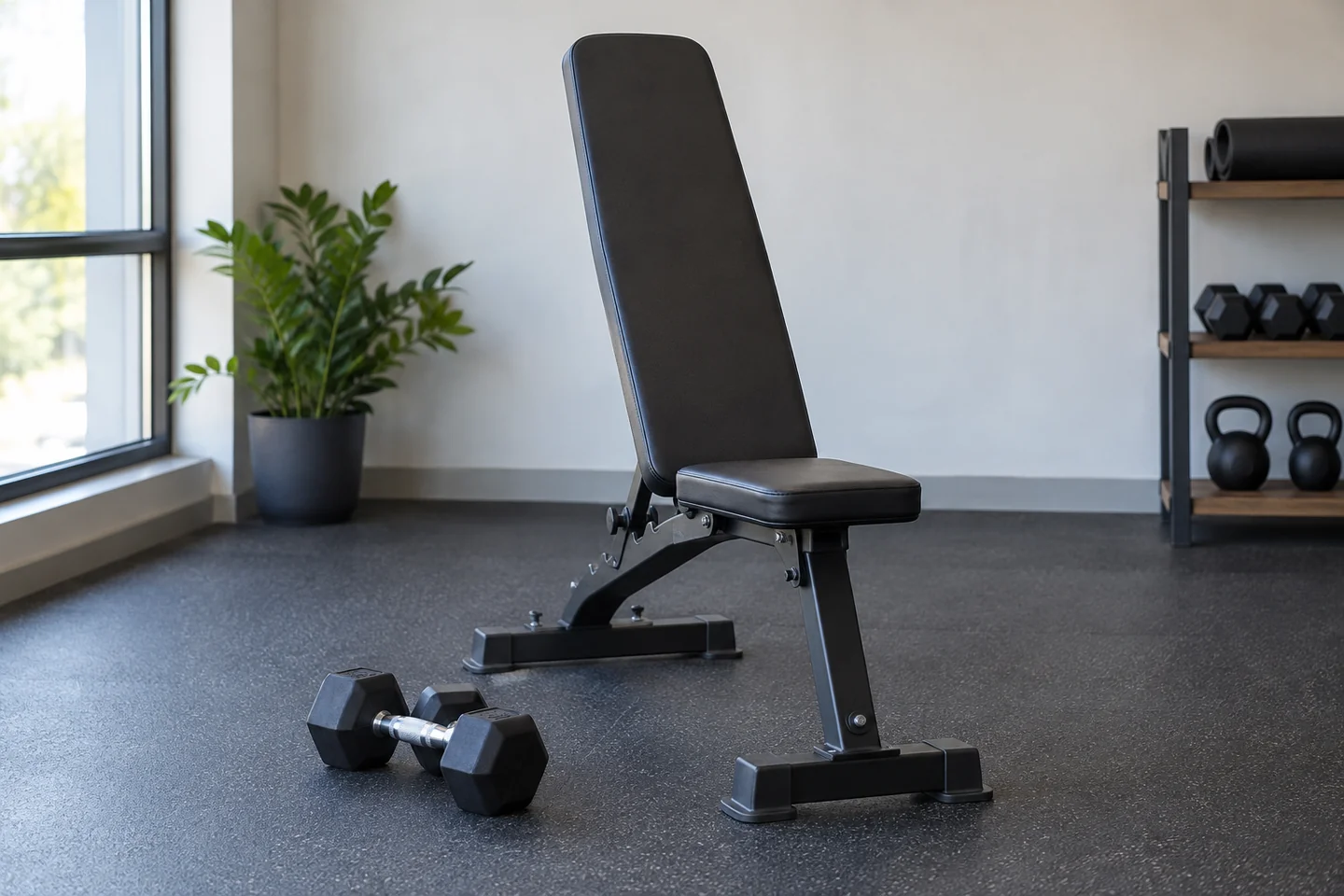
For a seated version, use a stable bench with the backrest set appropriately for the exercise. Check that its adjustment is fully engaged and that your feet can rest securely. A nearly upright pad is not the same as a low incline, and sliding down the seat makes the position harder to maintain.
Practise the arm movement without weights first. You should be able to move through a comfortable path without forcing the head forwards or leaning dramatically backwards. The unloaded trial does not guarantee that every load will work, but it gives you a useful reference before the dumbbells add another demand.
Keep the first load easy to handle
Choose a light pair and learn how to bring them into position and return them safely. An instructor can show the transfer. Do not select weights solely on the assumption that a spotter will rescue an awkward start. Getting them to shoulder height is part of the task, and it should not require an uncontrolled swing.
Press smoothly overhead through a comfortable range, then lower under control. Keep the wrists reasonably aligned with the forearms and avoid forcing the weights together at the top. The dumbbells need not collide to complete the repetition. Let the movement remain controlled rather than turning the final inches into a sudden shove.
If completing the press requires a pronounced back arch or a push from the legs, you have changed the task from the version you intended. Reduce the load or range and get feedback. A deliberate push press is a separate exercise; accidentally turning a seated shoulder press into a whole-body effort is not a useful substitute.
Allow a workable hand position
Dumbbells permit more freedom of orientation than a fixed bar. Some people find a partly neutral hand position more comfortable than palms facing directly forwards. Make adjustments gradually and check them with a trainer rather than forcing the elbows into a prescribed photograph. Comfort alone does not establish perfect technique, but pain is not a requirement of learning it.
Be clear about what you are changing. Rotating the hands, altering the backrest and increasing the weight at once makes it difficult to tell which change affected the movement. Keep the trial simple enough to evaluate. A small adjustment can be useful without requiring a completely new variation.
Overhead clearance is easy to forget in a home room or low-ceilinged studio. Check lights, beams and ceiling fans before bringing weights overhead. A seated position may still bring the dumbbells surprisingly high, particularly when the bench itself is tall. Measure the moving space, not just your standing height.
Make the lowering and exit deliberate
The set should finish while you can guide the weights back to the starting position and put them down safely. Do not reserve the exit for the moment your arms can no longer control them. If you are unsure about that process, use a lighter pair and practise it with instruction.
Notice whether one dumbbell begins descending much faster than the other. End the set rather than trying to force both through another repetition. That observation does not diagnose an imbalance, but it is a clear sign that the current repetition is no longer matching the one you planned.
Allow room behind the bench as well as overhead. Someone walking close behind a seated press may enter the area where a dumbbell moves during the start or finish. Move the bench before loading it if the surrounding traffic makes that likely. At home, a wall immediately behind the backrest may also restrict the transfer into position. The empty bench fitting into the corner does not establish that a person and two moving dumbbells fit there. Test the whole sequence with empty hands and then very light equipment, rather than judging only the top position of the press.
When recording the exercise, include whether it was seated or standing and the approximate backrest setting. These details explain more than the weight alone. A repeatable position makes future changes easier to judge, while a comfortable movement and a controlled return remain more useful than reaching a heavier number at the cost of the setup.