Start with a small experiment
Stand in a clear area without a weight. Place your feet around hip width or a little wider, allowing a small outward turn if that feels natural. Perform a shallow, unhurried squat and return to standing. The first question is whether you can keep your feet settled on the floor, not whether your thighs reach a particular line in the mirror. Your knees and hips should bend together without a sudden drop at the bottom.
Try a modest change in width, then repeat. Change only the width this time, leaving the toe angle broadly similar. If you move everything at once, it becomes difficult to tell which change helped. There is no need to hunt for a perfect angle measured in degrees. You are looking for a position from which a few comfortable repetitions look and feel reasonably alike.
Look at what actually changes
A stance that feels secure near the top may become awkward when you go lower. Treat depth as a separate choice. Stop before the movement becomes a struggle to keep your balance; do not force more depth by rolling onto the inner edges of your shoes. Foot pressure can shift slightly during movement, but the heels and front of the feet should remain in contact rather than repeatedly peeling away.
Knees travelling forwards are part of many normal squats. A rule that they must never pass the toes can make a beginner sit back so far that the movement becomes harder to control. Instead, watch for a comfortable relationship between the direction your toes point and the direction your knees move. If you cannot find that relationship, a trainer watching a light practice set can offer more useful feedback than another stance photograph.
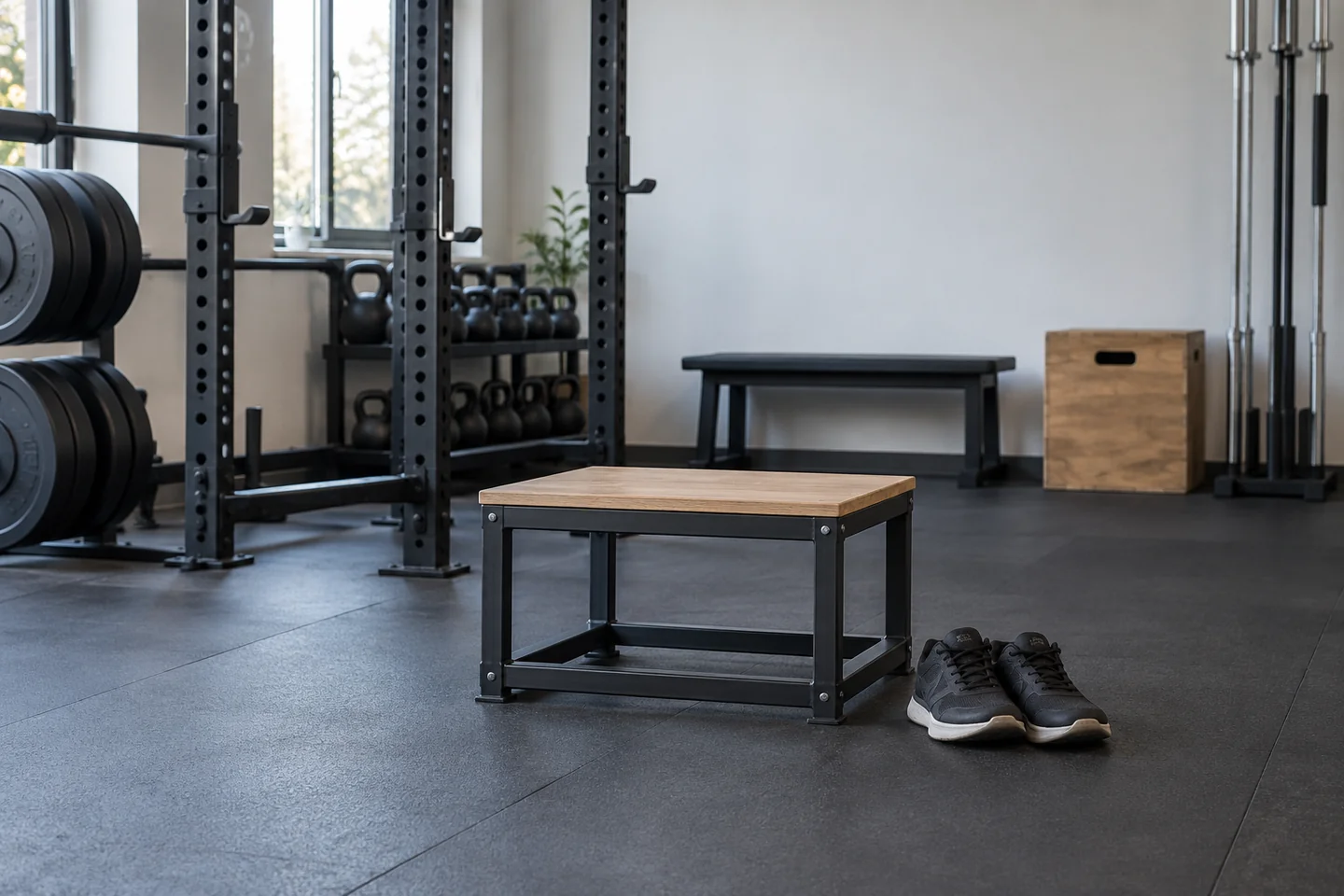
Use a stable box behind you if you need a visible reference for how far to descend. It should not force you to fall backwards to reach it. The box is a marker, not an instruction to relax suddenly onto a seat. Keep the trial unloaded while you decide whether the height and distance make sense.
Keep the useful details
Once a stance works, notice it in ordinary terms: slightly wider than the hips, toes gently out, shoes level. You can make a small floor mark during practice if the gym permits it, but avoid turning setup into an elaborate measuring exercise. A quick glance down before the set is usually enough to remind you where your feet belong.
Adding a weight can change how the squat feels, especially when it is held in front of the chest. Recheck the movement with a light load rather than assuming the unloaded stance guarantees everything else. A stance is a starting arrangement, not a promise that every load, depth or variation will suit it. Pain is a reason to stop the experiment and seek individual advice, not to keep widening your feet until something gives.
If two nearby positions both feel comfortable, choose one for the session. Repeating a workable setup gives you something to learn from. Constantly switching between very wide, narrow and sharply turned-out positions can create more uncertainty than useful information.