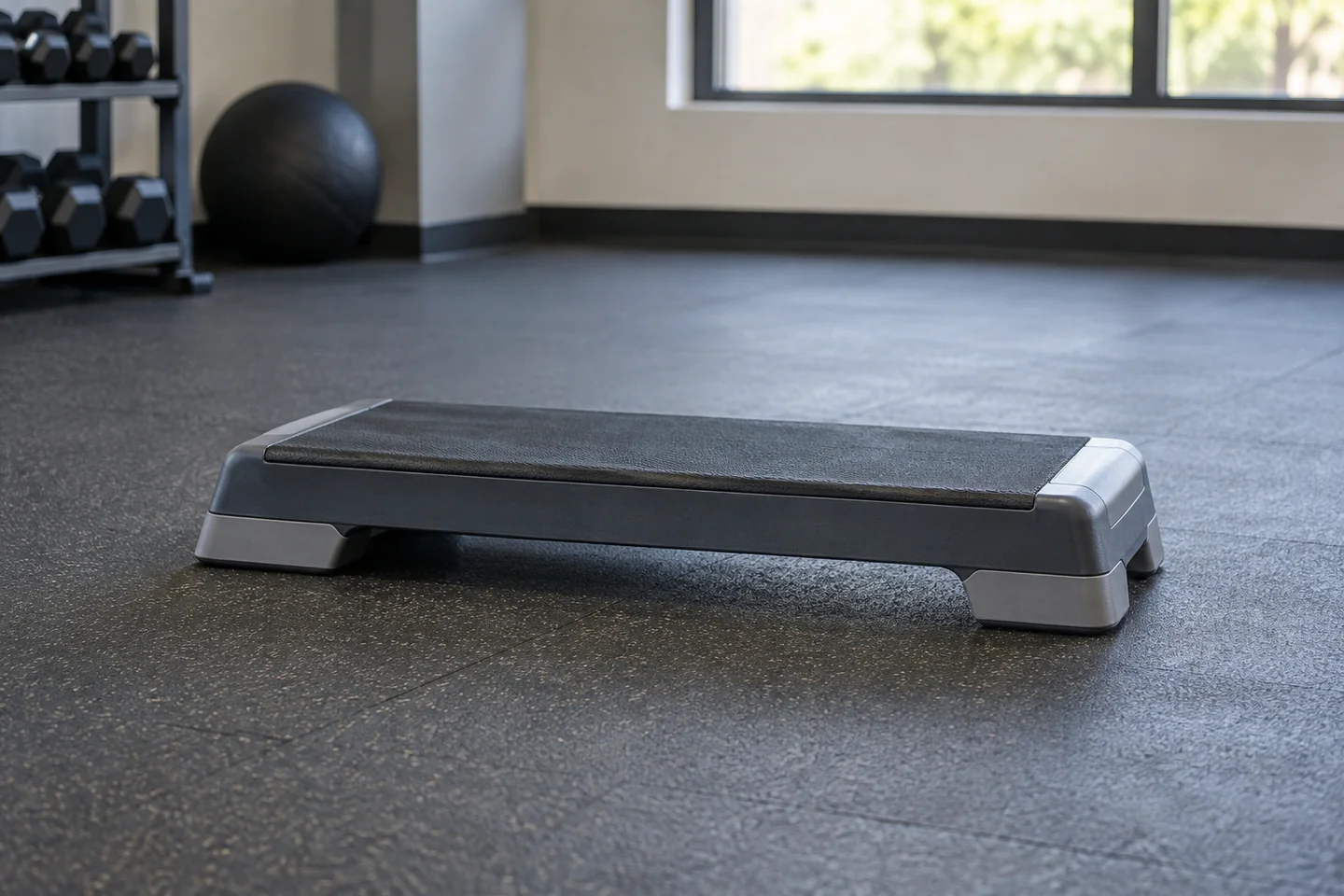
Try the lowest sensible option
Use a stable exercise platform with a nonslip top and enough room for your whole foot. Check that any risers are fitted correctly. A household chair is not a substitute. Begin without added weights and place one foot fully on the step before transferring weight onto it. If you must swing the leg up or turn the foot sideways to find space, reassess the platform.
A lower step can make it easier to learn the movement without a large push from the trailing foot. Rise deliberately, then step down under control. The descent is part of the test: a height that you can climb but can only drop from is not a useful starting choice. Keep the surrounding floor clear so that the landing foot has a predictable place.
Watch the first few repetitions
Notice whether you keep changing where the lead foot lands. Moving closer to the step before starting may solve a reach problem. If the knee or torso lurches sharply to complete the ascent, try a lower height and ask for feedback rather than adding speed. There is no need to balance on one leg at the top unless that is specifically the version you are learning.
Try both leading legs. Do not make the platform higher because one side felt straightforward while the other remained uncertain. You can leave the height unchanged and concentrate on making the placement and descent consistent.
When the platform is shared, check it again before each set. Another person may have added risers or shifted it onto a different floor surface. Record the actual height or riser arrangement if you want to repeat it next time; the colour of the step alone may not identify the setting. Adding a dumbbell, reducing hand support or using a taller platform are separate changes. Choose one that has a clear purpose instead of making all three together.