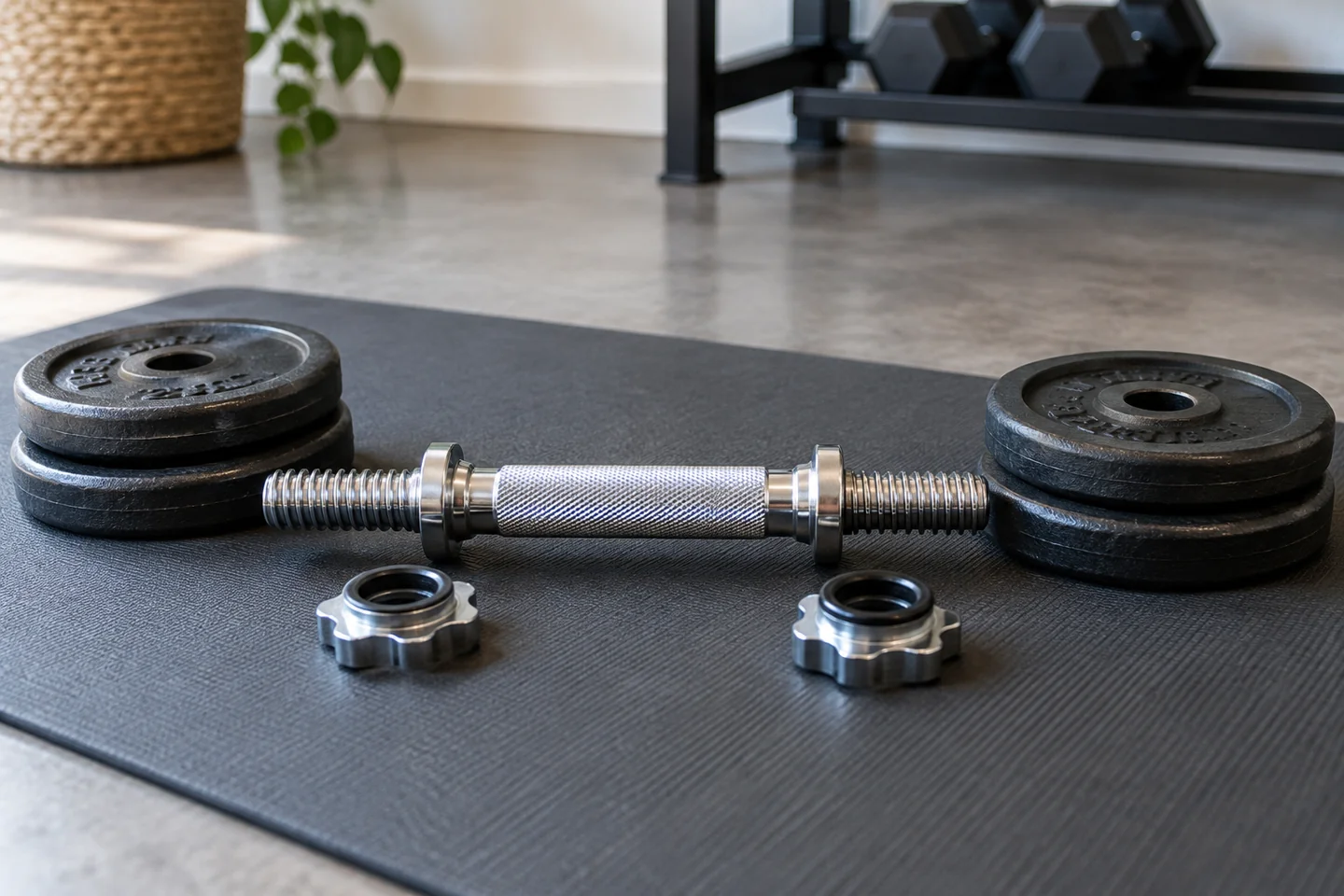
Know which mechanism you own
A threaded collar, selector dial, sliding pin and internal locking system are not the same design. Locate the official manual using the model number. Read the weight-change procedure, inspection requirements and restrictions before use. If you bought the set second-hand without instructions, identify it before loading it.
For a plate-and-collar design, follow the prescribed loading arrangement and fastening method. For a selectorised model, change the setting only in the position and manner specified, often while it sits in its cradle. Do not turn selectors while holding the dumbbell above the floor unless the manufacturer explicitly instructs that action.
Check for visible damage, missing parts and incomplete engagement. Perform only the locking check described by the maker. Do not suspend a questionable load over your body to see whether it holds. If a plate fails to engage or something behaves differently from the instructions, stop using the equipment and contact the manufacturer.
Treat every change as a new setup
When changing both ends or both dumbbells, confirm that all required selections match the intended arrangement. It is easy to adjust one side and become distracted before completing the other. Take the moment to verify the whole pair while it is still supported.
Keep the cradle or loading area level and clear. Loose bands, clothing or debris can interfere with placing components correctly. Do not force the dumbbell into a tray that is obstructed. If plates are not sitting as the manual shows, correct the unloaded arrangement before continuing.
Respect handling limits. Many adjustable models are not intended to be dropped or used as body-weight supports. Gripping a selector or removable plate may also be prohibited. Read those instructions rather than copying an exercise demonstrated with a different type of dumbbell.
Keep the model information accessible
Save the manual and product identification so you can check maintenance advice and any current safety notices. An old online review is not a substitute for the maker's current instructions. If a recall applies, follow its remedy rather than attempting a home repair.
If two people share the set, agree that each user verifies the settings independently. A verbal assurance that the previous person checked it is not a substitute for confirming the load you are about to use. Put the dumbbells into their proper resting position between users rather than handing over a partly adjusted unit. Keep the manual's inspection steps near the storage area until they are familiar. This makes the routine easier to follow without relying on memory during a hurried change.
When something becomes loose or unreliable, set the equipment aside and mark it clearly as unavailable. Do not leave it among sound weights with the intention of remembering which one has a problem. A locking system needs to function as designed on every use; extra caution while holding it does not compensate for a faulty part.