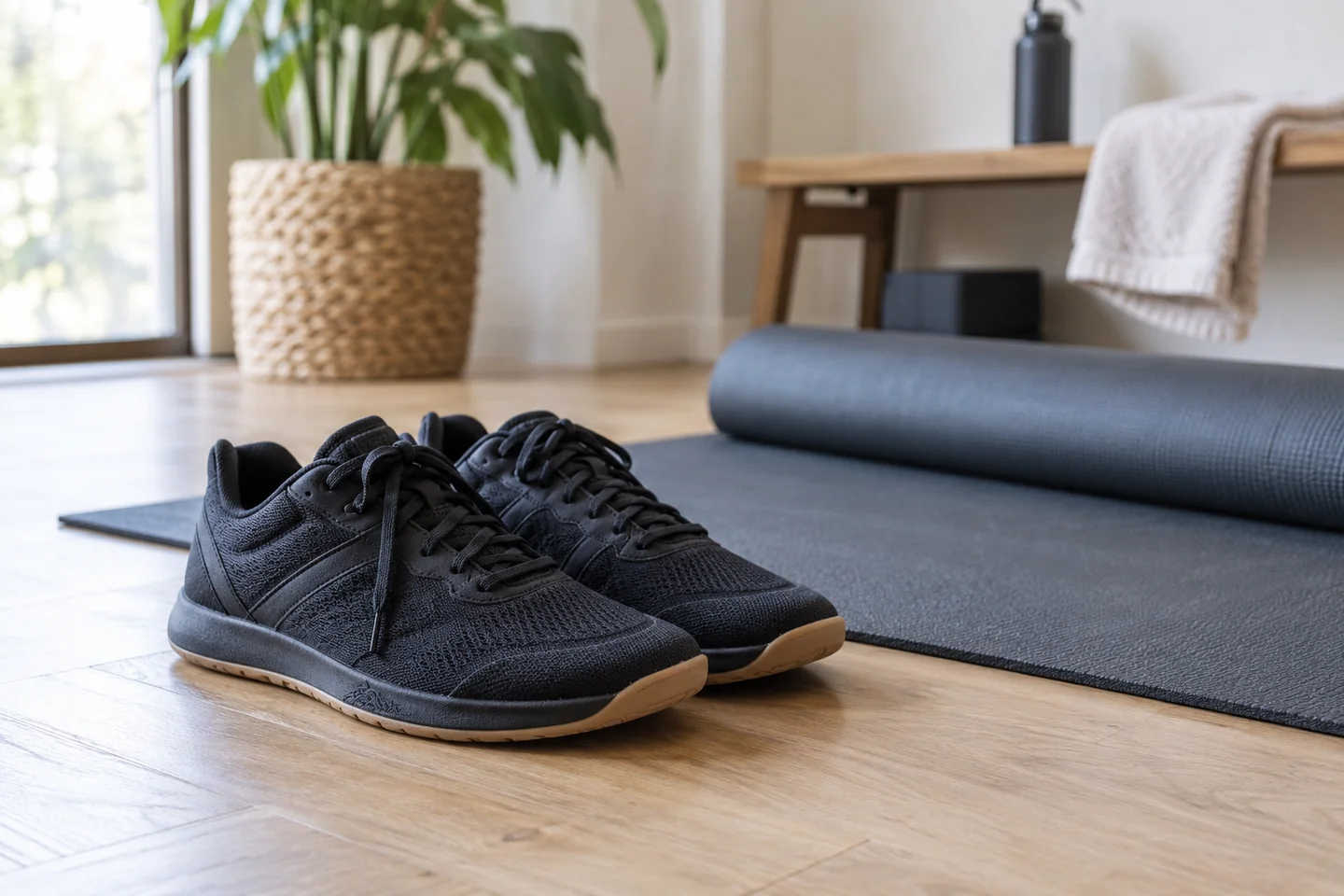
Begin with traction and stability
Check the floor in the footwear you intend to use. The shoe should not slide during an unloaded rehearsal, and the sole should feel stable for the movement. Loose slippers and socks on a smooth floor can be poor choices when you need secure footing. A mat helps only if it also stays in place against the floor.
Consider the type of exercise. Floor-based movement, standing strength work and stepping activities put different demands on the contact surface. A very soft running shoe may feel different from a firmer training shoe during a stationary lift. That observation does not mean everyone needs specialist footwear; it means you should notice how your own setup behaves.
Try a few easy movements before picking up weights. Can you place the foot fully, change direction when required and stop without slipping? If the shoe catches the edge of the mat or the mat bunches beneath it, change the arrangement. Do not wait for a loaded repetition to discover the problem.
Bare feet are a choice with conditions
Some learned exercises may be comfortable barefoot on an appropriate clean surface. Others may require footwear for the environment or equipment. Follow any gym, product or instructor guidance. Bare feet do not protect against a dropped weight, and shoes do not make dropping one acceptable either.
If you have a condition affecting foot sensation, circulation, balance or skin integrity, seek individual advice about suitable activity and footwear. A general article cannot determine whether barefoot exercise is appropriate. Avoid adopting a trend that conflicts with guidance you have already received.
Check for small debris before using the floor without shoes. A room that looks tidy can contain a sharp fragment or an overlooked equipment part. Outdoor surfaces add temperature, grit and unevenness, so do not transfer an indoor barefoot arrangement to a patio without considering those differences.
Keep changes gradual and observable
Switching from cushioned shoes to a firmer or barefoot setup changes the feel of the movement. Begin with an easy trial rather than combining the change with your hardest load. Notice contact and control without assuming that every new sensation is beneficial.
Do not force a foot position to make a particular shoe work. If the sole shape, fit or lacing creates discomfort, stop and address it. Check that the heel is secure and the toes are not compressed, while following the fitting guidance appropriate to the shoe. An exercise session is a poor time to ignore a clear fit problem.
Keep an indoor pair clean if that helps maintain the floor and mat. Store it where it is easy to put on before moving equipment. This can be a more consistent arrangement than deciding between several unsuitable household options each session.
Let the surface decide the final check
Carpet can catch a sole during turning; smooth floors can be slippery; protective tiles can separate at the joins. Walk and rehearse on the actual area you will use. The same shoes may behave differently a few feet away where the flooring changes.
If you move between mat work and standing work, check the transition. It may be simpler to step fully onto a suitable firm surface for one exercise rather than straddle the mat edge. Put weights down before adjusting footwear or moving the mat.
For a session that includes both floor and standing exercises, decide whether you will keep the same footwear throughout. Taking shoes off and putting them on repeatedly can interrupt the setup, but leaving loose shoes beside the mat creates an obstacle. Choose a clear place for them outside the moving area. If an instructor has asked for a specific footwear arrangement to observe a movement, clarify whether that applies only to the assessment or to your ongoing practice as well. A temporary observation should not become an assumed rule for every future session.
Check the sole for wear as well as dirt. A shoe that has become smooth in one area or started separating may behave differently from the pair you remember. Retire or repair footwear appropriately rather than using a worn pair indoors simply because it is no longer suitable outside.
There is no single choice that settles every home exercise question. Aim for a sound surface, secure contact and footwear appropriate to the task and your circumstances. Once those are in place, you can pay attention to the movement rather than repeatedly correcting a slipping foot or an unstable sole.