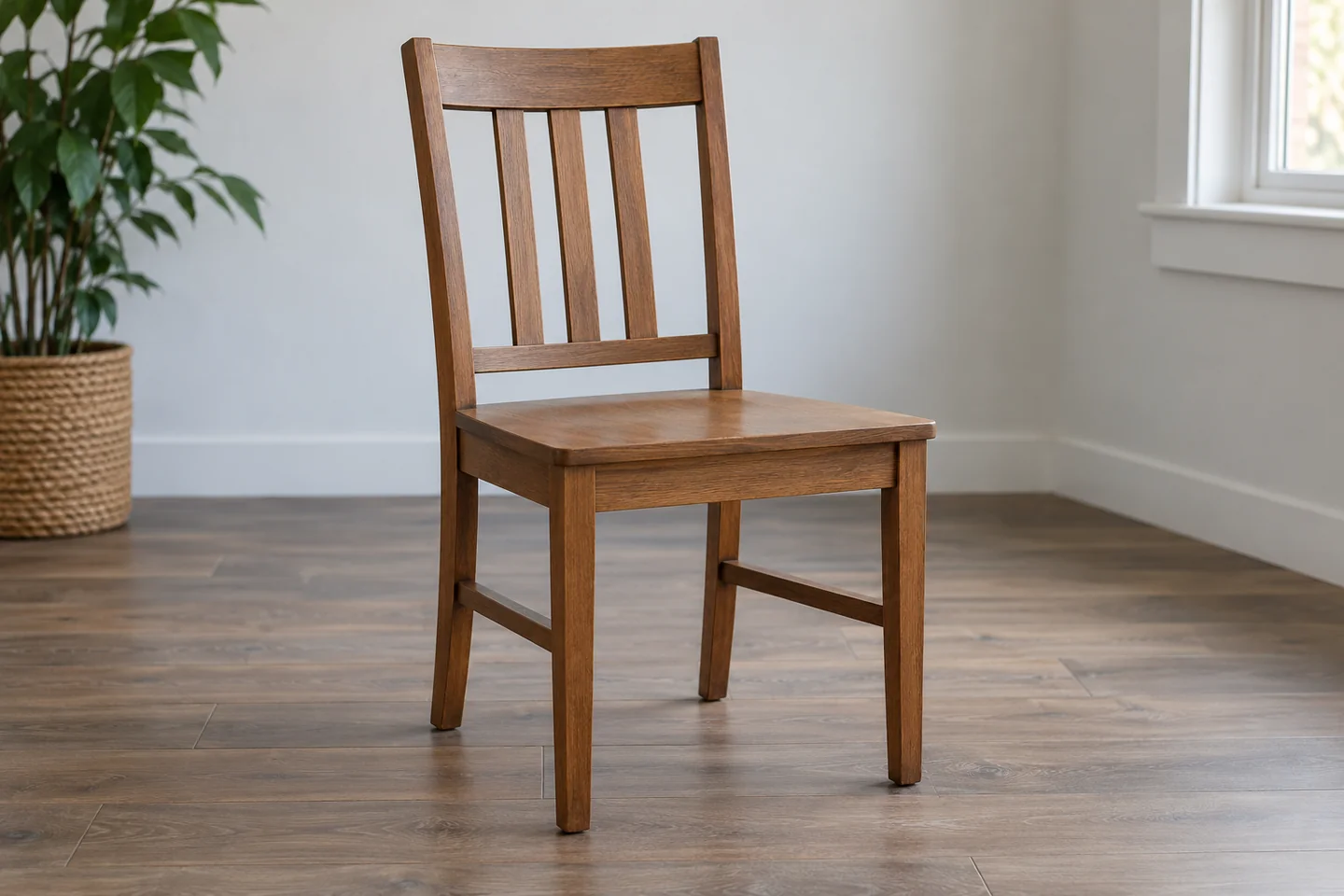
Decide what the chair would be doing
Sitting down and standing up from a suitable chair is different from stepping onto it, leaning heavily against its back or placing feet on it for another exercise. The direction and amount of force change. A chair that supports sitting may slide or tip when pushed sideways.
If an exercise calls for a chair, follow the guidance for that exercise and use a sound, stable chair on a level nonslip surface. Avoid wheels, loose joints and folding mechanisms that could close unexpectedly. Check the feet and frame before using it. Do not try to stabilise damaged furniture by wedging random objects underneath.
Ask an instructor to help choose the support if you are unsure. A fixed rail or purpose-made exercise bench may be more suitable for a movement involving substantial leaning or loading. There is no need to make every household object serve as gym equipment simply because it is nearby.
Keep the intended limits
Do not use a dining chair as a step-up platform. Its seat may be too high, slippery or shaped poorly for the foot, and its design is not the same as an exercise step. Choose equipment intended for standing on and a height you can control.
Likewise, placing a chair against a wall does not certify it for every use. The back can still flex, the feet can shift and the seat can be unsuitable for a hand position. Evaluate the actual task rather than treating wall contact as a universal solution.
For a taught seated movement, leave enough room around the chair to move and stand up afterwards. Keep loose equipment out from under it. If the chair begins moving or makes an unfamiliar sound, stop and inspect it before continuing. A support should reduce uncertainty; if you spend the exercise monitoring whether it will slide, choose a more appropriate arrangement.