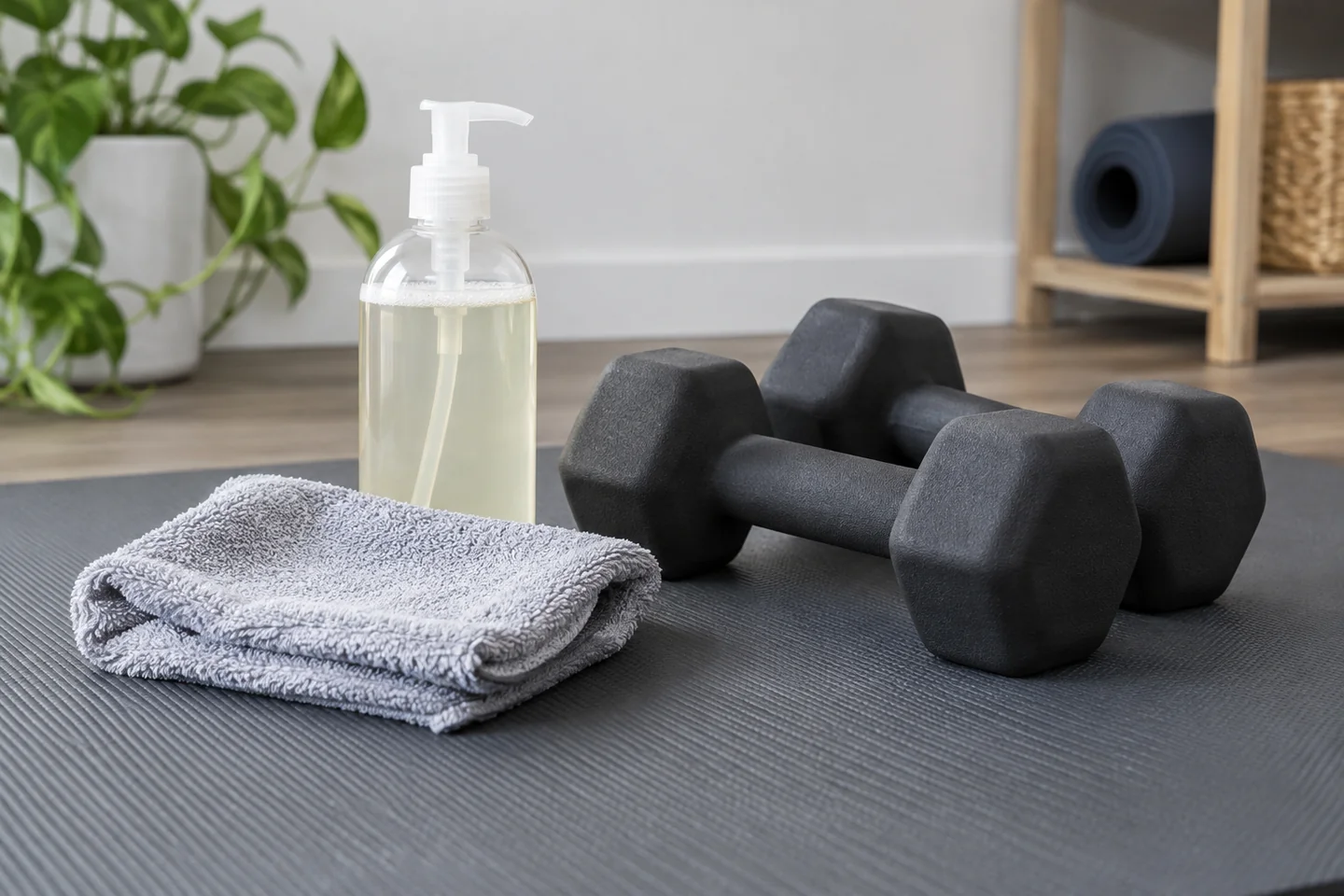
Read the care directions before mixing a solution
Find the manufacturer's instructions for the item. Check which cleaners, cloths and drying methods are allowed. Do not assume that a strong household disinfectant is appropriate for every surface. Some coatings and mat materials can be damaged by chemicals, soaking or machine washing.
For ordinary wiping, use the method specified and avoid leaving a slippery residue on gripping surfaces. Clean handles need to be dry before the next use. A pleasantly scented product is not a benefit if it changes the friction where the hand holds a weight.
Keep liquid away from adjustment mechanisms and any electronics unless the instructions explicitly allow that cleaning method. Spraying broadly across an adjustable dumbbell or a bench joint can send moisture where it is difficult to remove. A controlled application to a cloth may be appropriate for some products, but check rather than generalising.
Separate dirt from damage
While cleaning, look for loose coverings, cracks, torn padding and worn band material. Cleaning does not repair these problems. Put questionable equipment aside and follow the maker's guidance on replacement or service. Do not cover a damaged grip with tape merely because the surface underneath is now clean.
Grit deserves particular attention after outdoor use. Remove it in the approved way before moving the equipment back onto indoor flooring. A small piece trapped beneath a mat or bench foot can mark a surface even when the top of the equipment looks tidy.
Use separate cloths where necessary so you do not transfer an oily product from one item onto another. Label any diluted cleaner according to its instructions and keep it out of reach of children and pets. Never mix cleaning products to make a stronger solution.
Let storage finish the job
Allow equipment to dry as directed before folding, rolling or closing it in a bag. A mat put away damp may not be ready to use when unrolled next time. Avoid shortcuts such as placing a rubber item beside a heater unless the care guidance permits it.
Keep the original care label or save the official instructions when buying equipment. This is particularly helpful if two mats look similar but use different materials. A quick note on the storage bag can identify which guidance belongs to which item. If a product develops a sticky surface or strong change in texture, ask the manufacturer whether it needs replacement instead of repeatedly applying stronger cleaner. Cleaning should restore the intended surface, not conceal material deterioration.
Make the cleaning supplies easy to reach but separate from the moving area. A routine that ends with dry handles, sound surfaces and equipment back in its place is enough. You do not need to turn every session into a deep clean; follow the product's care needs and address visible dirt or shared-use requirements without using harsh methods by default.