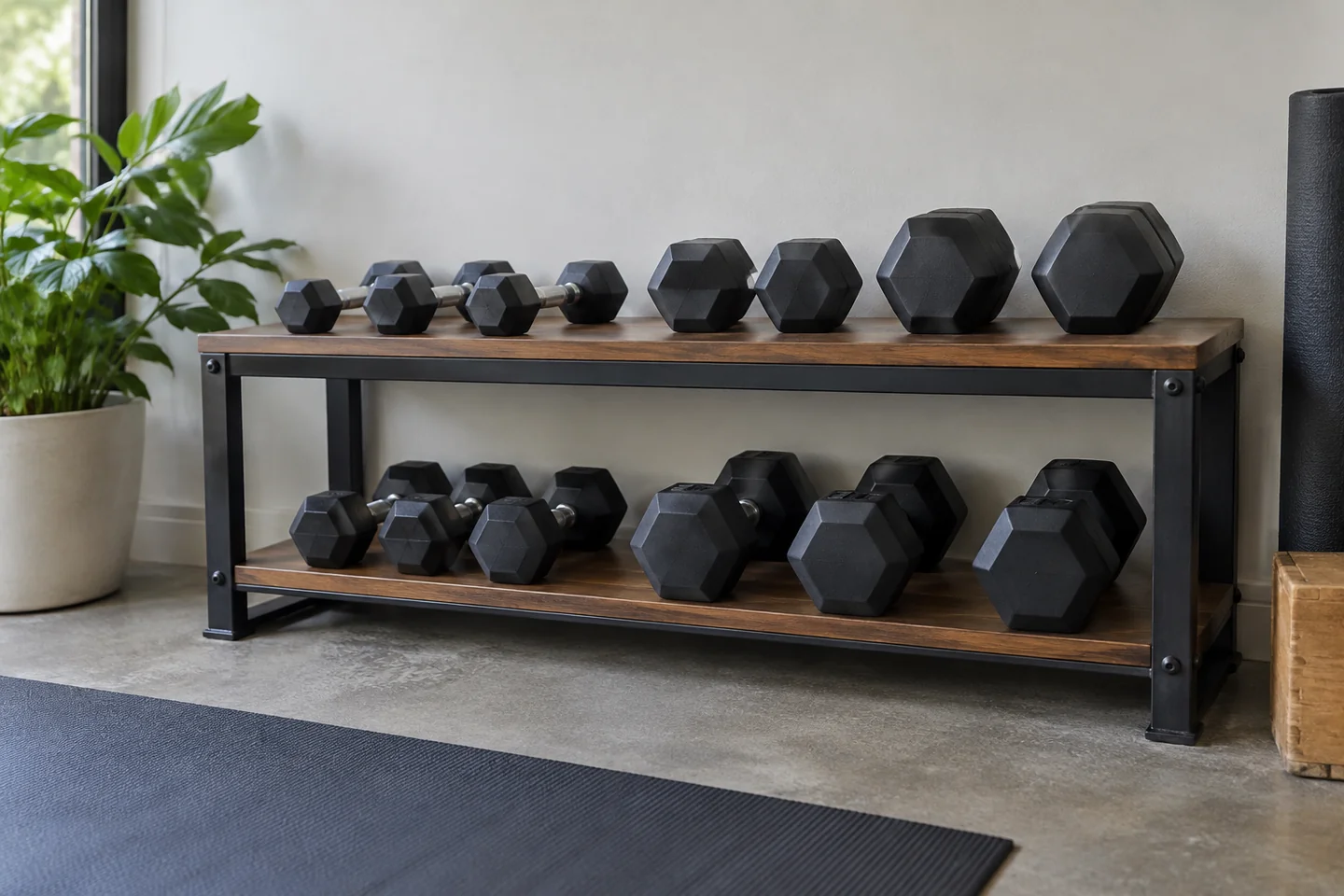
Keep the load low and supported
Use a stand, rack or shelf rated for the equipment and assembled as instructed. A decorative unit may have a much lower capacity than its sturdy appearance suggests. Check the total load, including every pair you intend to add, and follow any anchoring requirements. Do not assume a rating for the whole unit applies to one small shelf.
A low position can reduce the need to lift weights overhead to put them away. Keep the handles reachable without a long bend across other equipment. If retrieving one pair requires moving several heavier items first, the layout needs work. Store frequently used weights where they can be collected directly.
Round dumbbells and plates require a design that prevents rolling. A flat patch of floor is not automatically secure if there is a slope or passing feet can nudge them. Use the intended supports rather than wedging a weight with a towel or loose shoe.
Leave space for hands and feet
Racks can create pinch points. Place each item fully into its support before releasing it, keeping fingers clear. Allow enough room in front of the rack to stand and handle the weights without backing into furniture. The storage footprint includes the person using it.
Keep cables, bands and clothing separate from the contact surfaces. A band caught under a plate may be damaged, and a towel can stop a dumbbell from settling properly. Small accessories belong in their own container rather than hidden among heavy objects.
Consider children and pets when deciding on access. A low shelf is convenient for an adult but may also be easy for others to reach. Use an appropriate room or secure storage arrangement, and do not rely on the weight being too heavy to move. Small collars and loose parts can be accessible even when the dumbbells are not.
Review the setup when the kit grows
Adding one more pair changes the load and available space. Check the rating again instead of filling every visible gap. A crowded rack makes it harder to place weights carefully and easier to leave something partly supported.
Take account of how a cupboard door or drawer opens when the storage is full. A weight placed against the door can fall or roll when it is opened, and a sliding drawer may have its own load limit. Use a dedicated support rather than assuming enclosed storage is automatically secure. Label weights clearly if their markings are worn, using a method that does not damage the equipment. Being able to identify the pair before lifting it reduces unnecessary handling.
If the stand rocks, bends or develops loose hardware, stop using it until the issue is resolved according to its instructions. Avoid a temporary stack beside it that creates a new obstacle. A storage system earns its space by making pickup and return straightforward every time, including the days when the session ends with tired hands.