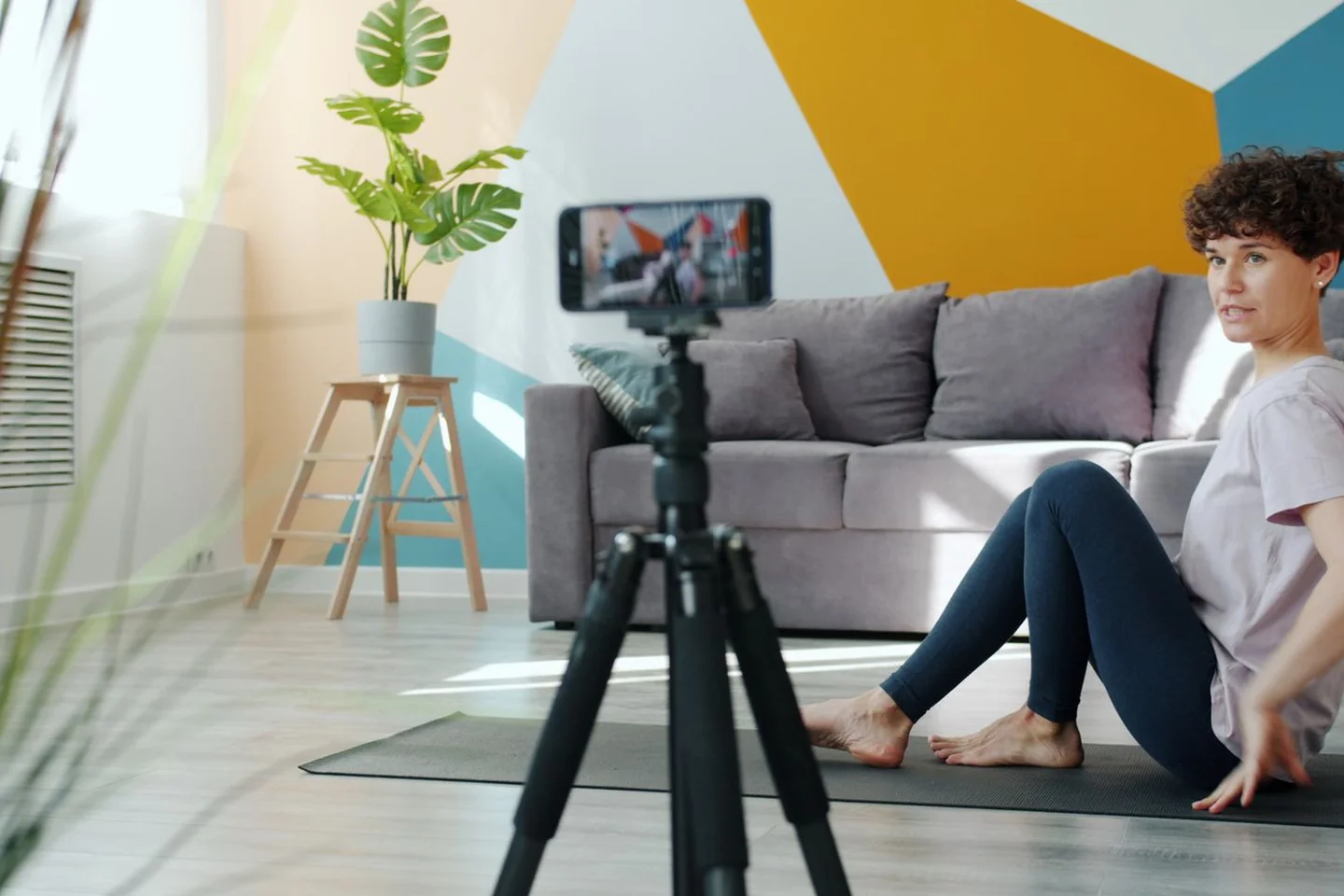
Put the phone outside the exercise
Use a stable stand or tripod on a surface where it cannot fall into the working area. Keep charging cables out of the way. The phone should not sit under a bench, beside a moving dumbbell or on furniture that you will use for support. Check the whole path of the exercise before recording.
Choose the angle for the question. A side view may show the depth of a squat or hinge better than a front view; a front view may show foot placement more clearly. If a trainer has requested a clip, ask which angle and how much of the body they need to see. Guessing can produce a file that does not answer their question.
Frame the relevant body parts and equipment with a little margin. A camera placed too close may cut off the feet or weights at the end of the movement. Use an unloaded rehearsal to check the frame, then leave the phone alone during the set.
Review one thing at a time
Watch after setting the equipment down. Do not turn your head towards the screen while holding a weight to check whether you are in shot. If the recording misses the movement, fix the camera before the next attempt rather than adjusting your exercise to stay inside the frame.
Look for the specific detail you wanted to observe. You might compare the starting position of the first and last repetitions or see whether a support moved. Avoid a long search for faults in a frozen frame. Video can make a movement visible, but it does not tell you the cause of pain or measure every force involved.
If you share the clip for advice, explain the exercise, load and what you noticed. A clear question such as whether the bench position is causing an awkward reach is easier to answer than a request to judge everything. Seek qualified guidance for technique rather than relying on an unverified comment thread.
Keep privacy and storage simple
Check the background for other people, personal documents and screens before filming. In a shared gym, follow its policy and obtain appropriate permission; at home, ask household members before including them. There is no need to publish a practice clip to use it as feedback.
Check the recording before repeating a set solely for the camera. If the useful detail is already visible, another attempt may add little. When the clip is unclear, change the angle with the equipment resting and make the next trial easy. Avoid increasing the load or exaggerating the movement to make the footage look more convincing. A quiet, ordinary practice repetition is often the clearest material for a specific technique question.
Delete recordings you no longer need and understand where your phone backs them up. If you send a file to a trainer, use the agreed channel. A useful clip is a small record of a particular movement, not a requirement to build a public archive of every session.