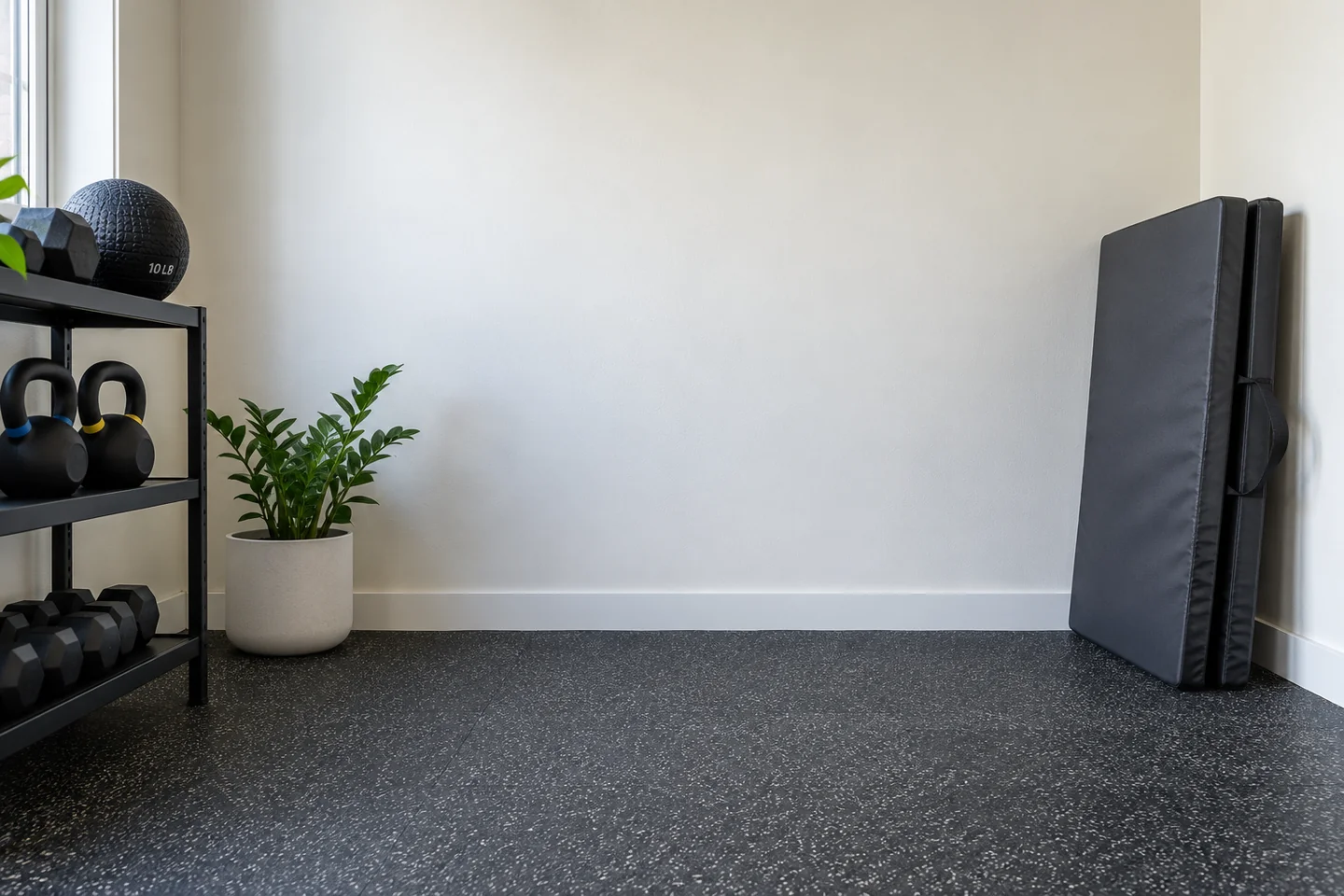
Check more than the paint
Choose a solid surface appropriate for the movement. Glass, a lightweight screen or a loose wall panel is not a substitute for a sound wall. Remove pictures or objects that could be contacted. If you rent, consider whether the exercise or equipment might mark the surface, and avoid attachments that are not approved for the wall and property.
The floor needs traction and room for the feet. A wall push-up, for example, uses space behind the hands as the body inclines. A small decorative rug can slide even when the wall is secure. Move it out of the way or choose a suitable surface rather than balancing partly on and partly off it.
Look overhead and to both sides. A shelf at shoulder height may be close to an arm movement; a radiator can make the available wall much smaller than it first appears. Do an unloaded rehearsal before setting equipment in the corner.
Keep the corner easy to leave
Place the phone, water and any weights outside the stepping area. Avoid routing a charging cable across the floor to reach a screen. You should be able to stop the exercise and step away without negotiating a pile of objects behind your heels.
If another person needs the route, agree on a time or choose a different wall. A hallway may offer a long clear surface but still be a busy passage. The best arrangement is one that lets you concentrate without repeatedly interrupting the movement to let someone through.
After use, wipe any contact marks with a method appropriate for the surface and return equipment to storage. Keep a note of the arrangement if moving one small piece of furniture makes it work. A home exercise space does not have to be permanent or large, but it should be deliberate enough that the wall is an aid rather than one more obstacle.