Planning & progress
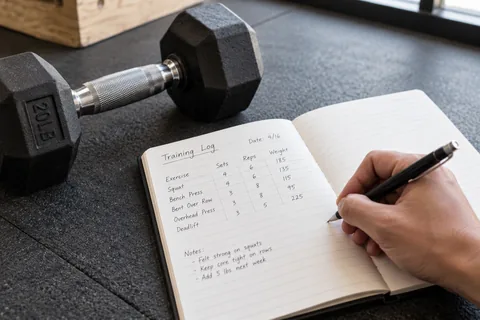
What to write in a training log
Record enough to repeat the session and understand what happened. Most beginners do not need a page of measurements for every set.
Read articleLOOK SOMETHING UP
Record enough to repeat the session and understand what happened. Most beginners do not need a page of measurements for every set.
Read article
The first month can establish equipment knowledge, a recording habit and a workable schedule. It does not need to prove every long-term ambition immediately.
Read article
A missed workout changes the calendar. It does not create a debt that has to be repaid the next morning.
Read article
Exercise order affects what you are fresh enough to practise and what happens when time runs short.
Read article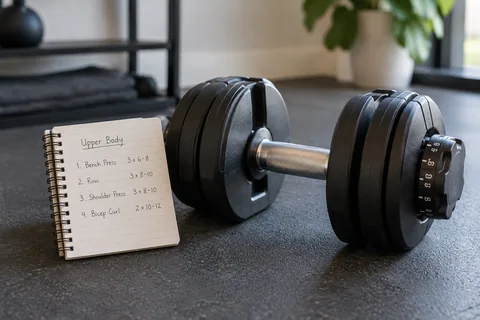
A range such as eight to twelve gives boundaries. It still needs instructions about effort, technique and when to change the load.
Read article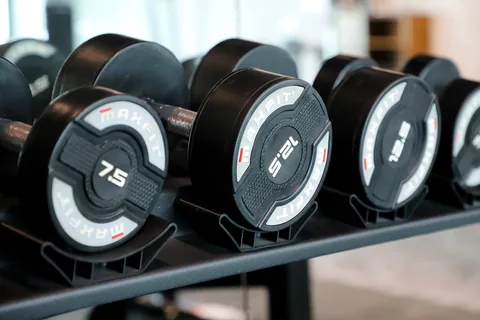
A useful weight entry says what was loaded, on which equipment, and whether the figure describes one hand or the whole exercise.
Read article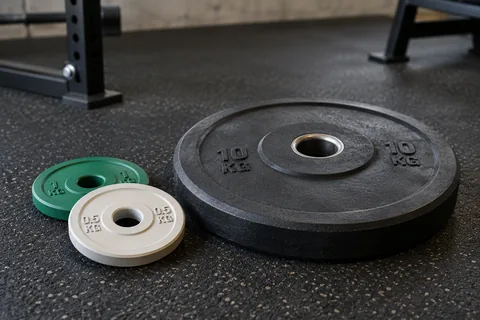
The next dumbbell on the rack may represent a sizeable change. Understand the available steps before treating every session as an instruction to move up.
Read article
Repeating familiar exercises gives you something solid to compare. Variety does not need to mean replacing the whole workout every visit.
Read article
Full-body and split routines organise a week's work differently. Their names tell you less than the number of appointments and the work assigned to each one.
Read article
A shorter workout needs a smaller scope. Trying to fit the full session into half the time usually changes more than the clock.
Read articleNo matches. Try another word or choose all subjects.